
This Nordic Ware Pan Has No Nonstick Coating. That’s the Point.
· NookPrep Editorial Team
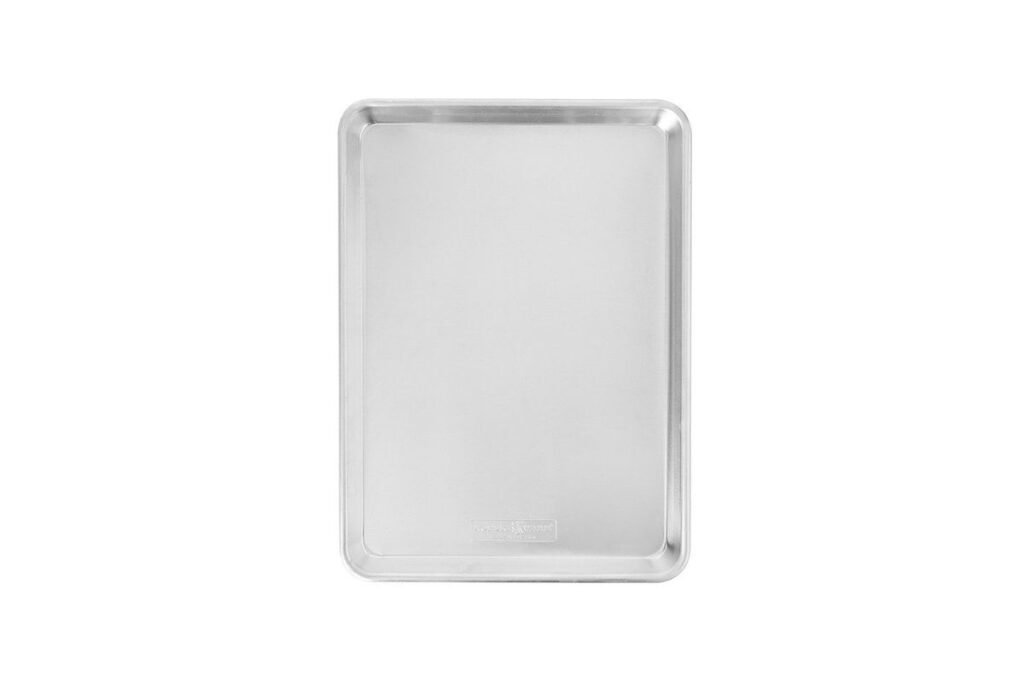
Sheet pans are deceptively simple. The frustration usually starts after a few high-heat dinners: a thin pan twists in the oven, baked-on oil darkens the surface, or a coated tray begins to look worn. The Nordic Ware Naturals Baker’s Half Sheet takes a different approach with pure, uncoated aluminum and a reinforced steel rim. The result is a classic commercial-style pan that prioritizes even heating, durability, and repairable simplicity over a factory nonstick surface.
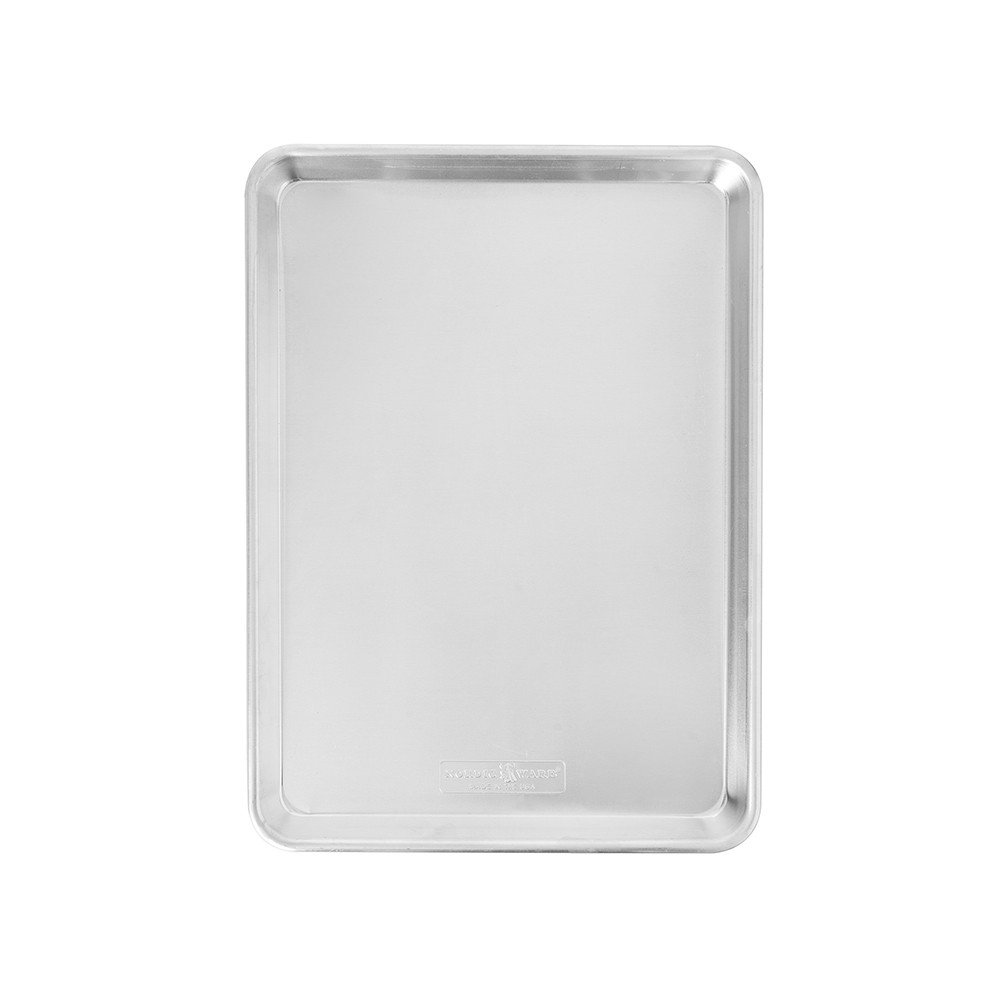
Quick answer: who is this pan for?
This is a strong fit for cooks who roast vegetables, bake cookies, make sheet-pan dinners, or want a rimmed aluminum pan without a synthetic nonstick coating. Nordic Ware lists the outer dimensions at about 17.9 by 12.9 by 1 inch, with an interior around 17.1 by 12.1 inches. That is the first thing to check in a compact kitchen: a “half sheet” is not tiny, and small ovens can be the limiting factor.
It is less ideal if you want everything to release without parchment, dislike hand washing, or use a countertop oven that cannot accept a pan this size.
Problem it solves best: flimsy or coated baking sheets that do not feel like long-term cookware.
Best for: cookies, roasting, sheet-pan dinners, cooling/freezing prep, and kitchens with a full-size oven.
Main trade-off: durable uncoated aluminum needs grease, parchment, or technique when sticking matters.
As an Amazon Associate I earn from qualifying purchases.
Check the Nordic Ware Naturals Baker’s Half Sheet on Amazon
Problem #1: “My sheet pan warps in the oven”
Metal expands when heated, so some movement is normal with sheet pans. The practical problem is a lightweight pan that twists enough to spill food or rock dramatically on a flat surface. Nordic Ware reinforces the rim with galvanized steel. That rolled, reinforced edge is meant to help the pan maintain its shape as temperatures change.
No thin metal pan should be described as physically impossible to warp under every condition. Sudden thermal shock—such as placing a very hot pan under cold water—can stress cookware. The better reason to consider this pan is the reinforced construction and long-standing simple material design, not a promise that physics no longer applies.
Problem #2: “I want even heat without a dark coated surface”
Aluminum conducts heat efficiently, which is why it remains common in baking equipment. A bright aluminum surface also behaves differently from a dark pan, which can brown the bottoms of cookies more aggressively. Nordic Ware uses pure natural aluminum rather than a dark nonstick coating on this model.
That makes the pan versatile, but it changes the release strategy. For sticky foods or delicate cookies, you may still want parchment, a silicone baking mat, or a light layer of grease. If “nothing sticks with no prep” is the priority, an uncoated aluminum sheet is not the most convenient category.
Problem #3: “Will a half sheet fit my oven?”
This is the key small-kitchen question. Nordic Ware lists the exterior at approximately 17.9 inches long and 12.9 inches wide. A standard full-size oven will often accommodate that footprint, but compact wall ovens, apartment ovens, and toaster ovens vary widely. Measure the actual rack width and depth with the door closed.
Leave room for airflow and for gripping the rim with an oven mitt. A pan that technically slides between the walls but leaves no handling clearance is not a comfortable fit. If your oven is compact, a quarter-sheet pan may be a smarter purchase even if the half sheet offers more cooking area.
The Half-Sheet Size Is Useful Right Until It Does Not Fit
The interior is roughly 17.1 by 12.1 inches, giving you enough surface for a meaningful batch of vegetables, cookies, or a multi-component sheet-pan dinner. That is where the half-sheet format earns its cabinet space: one pan can replace two smaller baking rounds when the oven has the room.
For one person cooking tiny portions, the same size can be unnecessarily large. Bigger area means more pan to wash and store. Capacity is useful only when your normal batch needs it.
That Raised Rim Does More Work Than It Looks Like
A rimmed sheet is more flexible than a flat cookie sheet because the edge helps contain oil, juices, and small pieces of food. The roughly 1-inch overall height is enough to support roasting and sheet-pan dinners without turning the pan into a deep roasting dish.
The trade-off is airflow. A flat cookie sheet can make sliding baked goods on and off easier, while a rimmed half sheet is the better generalist. If you own only one large baking tray, a rimmed design is usually easier to justify because it handles both dry baking and messier roasting tasks.
The Bare Aluminum Will Change Appearance. That Is Not the Same as Failing.
Uncoated aluminum changes appearance with use. Darkening, staining, and baked-on marks do not automatically mean the pan is ruined. In fact, expecting a bright commercial aluminum sheet to remain showroom-silver forever can lead to overly aggressive cleaning.
Nordic Ware recommends hand washing for this pan. Dishwasher detergents can discolor bare aluminum. If a perfectly uniform cosmetic finish matters more than easy inspection of an uncoated surface, stainless steel or a different finish may suit you better. If performance matters more than patina, discoloration is easier to accept.

Uncoated aluminum vs nonstick sheet pan
| Decision point | Nordic Ware natural aluminum | Typical coated sheet pan |
|---|---|---|
| Factory nonstick layer | No | Usually yes |
| Release convenience | May need parchment/grease | Often easier initially |
| Surface wear concern | No coating to peel | Coating condition matters |
| Appearance over time | Can stain/darken | Can scratch/wear |
| Best for | Simple long-term baking/roasting tool | Buyers prioritizing easy release |
What “PFAS-free” means here
Nordic Ware describes the Naturals line as PFAS-free because the pan is uncoated aluminum rather than cookware using a fluoropolymer nonstick layer. That is a material choice, not a performance score. It does not make food release automatically, and it does not remove the need to choose appropriate liners, oils, and cooking temperatures.
If avoiding a synthetic nonstick coating is part of your buying criteria, the construction makes the decision easy to understand: the cooking surface is aluminum.
Small-kitchen storage reality
The half sheet is broad and flat, so vertical storage can be more convenient than stacking it under several pans. A cabinet rack such as the YouCopia StoreMore Bakeware Rack can make sheet pans easier to pull individually, but only if your cabinet has enough vertical clearance.
Another option is to store the half sheet inside the oven when the oven is cold. That saves cabinet space, but it creates a new habit: the pan must come out before preheating when it is not part of the cook. Choose the storage routine you will actually remember.
Three real-world uses that justify the size
Sheet-pan dinner: the interior area gives vegetables and protein more room than a small tray, reducing crowding. Cookie batches: aluminum’s heat conduction and light surface color are useful for predictable baking. Prep and freezing: the pan can serve as a flat staging surface for freezing individual portions before bagging them.
Those are different jobs, which is why a simple sheet pan can earn more space than a specialized gadget. If you only bake twice a year, the value case is weaker.
What we would not oversell
This pan is not nonstick. It is not dishwasher-friendly if you care about aluminum discoloration. It may not fit a compact oven. And it will not stay visually perfect if used for high-heat roasting over years. Those are not hidden flaws; they are consequences of the material and size.
The upside is equally straightforward: a simple uncoated aluminum pan with a reinforced rim has fewer layers and finishes to wear out. That makes it appealing to buyers who prefer durable basics over feature-heavy bakeware.
Should you buy it?
Buy the Nordic Ware Naturals Baker’s Half Sheet if your oven can accommodate the 17.9-by-12.9-inch exterior and you want a durable, uncoated general-purpose tray for baking and roasting. It is especially compelling if you already use parchment or do not mind greasing the surface when needed.
Skip it if you rely on a countertop oven, want dishwasher-cleanup convenience, or strongly prefer a factory nonstick surface. In a tiny oven, a smaller quarter-sheet format can be more useful despite the lower capacity.
See the current Amazon listing for the Nordic Ware Naturals Baker’s Half Sheet
Before You Treat Bare Aluminum Like Nonstick
What size is the Nordic Ware half sheet?
Nordic Ware lists the exterior at about 17.9 by 12.9 by 1 inch and the interior at about 17.1 by 12.1 inches.
Is it nonstick?
No. This model uses a natural, uncoated aluminum cooking surface. Parchment, a silicone mat, or grease can be used when easier release is needed.
Can it go in the dishwasher?
Nordic Ware recommends hand washing. Dishwasher detergents can discolor natural aluminum.
Is it made in the USA?
Nordic Ware lists the Naturals Baker’s Half Sheet as made in the USA.
Does the rim help prevent warping?
The pan uses a reinforced steel rim designed to support its shape, but any metal pan can be stressed by extreme heat changes or thermal shock.
The Missing Nonstick Coating Is Not an Omission
The Naturals Baker’s Half Sheet is built around bare aluminum rather than a factory nonstick layer. That changes how you use and judge the pan. Food release may depend on parchment, a silicone mat, oil, or recipe technique, but there is no coating to become the central lifespan question.
For some buyers, that simplicity is the attraction. For others, it is extra work. If your idea of convenience is placing sticky food directly on a coated surface and washing quickly afterward, this pan may feel old-fashioned. If you prefer a straightforward metal surface and already use parchment for baking, the lack of coating may barely feel like a compromise.
Discoloration Is a Cosmetic Question Before It Is a Performance Question
Bare aluminum can change appearance over time, especially when exposed to certain detergents or cooking residues. That can surprise buyers who expect a baking sheet to remain bright and uniform. Nordic Ware recommends hand washing, which is partly why care habits matter.
A darker or less polished appearance does not automatically mean the pan has stopped doing its job. Buyers who need cookware to look showroom-new may dislike the visual aging more than buyers who treat sheet pans as working tools.
Thermal Shock Is a Better Thing to Fear Than a Normal Oven Cycle
Warping is one of the biggest anxieties around sheet pans. The reinforced rim is designed to support the pan’s shape, but no metal tray should be treated as immune to extreme stress. Rapid temperature changes—such as taking very hot metal and exposing it abruptly to much colder conditions—can be harder on cookware than ordinary heating and cooling.
The practical habit is simple: use the pan within normal cooking conditions, avoid unnecessary thermal shock, and let the material cool before aggressive washing. The reinforced rim is a useful construction detail, not a guarantee against every possible abuse.
The Half-Sheet Format Earns Space by Doing More Than Baking Cookies
A pan this size becomes easier to justify when it handles roasting vegetables, sheet-pan dinners, reheating, catching drips under another dish, and baking in addition to cookies. The large flat surface is the feature. If your cooking routinely uses that surface, the pan can replace several smaller trays.
If you own a compact oven or rarely cook more than one portion, the same size becomes a liability. A quarter sheet can be easier to store, wash, and fit while still covering small jobs.
Storage Is the Decision People Make Too Late
A half sheet can fit the oven and still be awkward everywhere else. Measure the cabinet slot, drawer, or vertical rack where it will live. A sheet pan stored flat often ends up under other cookware, which makes it annoying to retrieve. Vertical storage can make the large format much easier to own if the cabinet has enough height.
This is why the YouCopia rack pairs logically with a pan like this: the rack does not make the sheet smaller, but it can remove the unstacking problem. The combination only makes sense if you already have several flat items worth storing vertically.
Parchment Changes the Ownership Experience More Than Another Feature Would
For sticky or messy baking, parchment can reduce contact with the bare metal and simplify cleanup. It also changes how often you need to scrub baked-on sugar or oil. That does not make parchment mandatory, but it is part of the real-world workflow of an uncoated sheet.
If you dislike disposable liners, a reusable silicone baking mat may fit some recipes, though it changes the cooking surface and can affect results depending on what you are making. The point is that the pan is a platform; the release strategy is separate.
A Quarter Sheet Can Be the Smarter Choice Even If the Half Sheet Fits
Fitting inside the oven is only the first test. A smaller quarter sheet can be easier to wash in a compact sink, easier to store vertically, and more proportionate for one or two servings. If your normal cooking does not use the half sheet’s surface area, the larger pan creates more ownership friction without adding practical capacity.
The half sheet makes more sense when you regularly roast full trays of vegetables, bake larger batches, or want one broad surface for sheet-pan meals. Buy the format that matches normal volume, not the largest one the oven can technically accept.
The Fastest Decision Shortcut
Measure the oven and storage space first, then ask how often you would actually fill most of the surface. If the answer is “often,” the half sheet can justify its size through batch capacity and versatility. If the answer is “rarely,” a smaller tray may give you the same weeknight usefulness with less washing and storage friction. The uncoated aluminum surface should be a deliberate preference, not something you discover after buying.
When to Skip It
Skip the half sheet if your oven is compact, your normal portions are small, or hand-washing a nearly 18-inch pan would be irritating in your sink. Also skip it if a factory nonstick surface and dishwasher convenience are priorities. Bare aluminum is appealing because it is simple, not because it copies the behavior of coated bakeware.
Bottom line: choose the half sheet for surface area and simple bare-metal construction, not because it behaves like coated bakeware.
The half sheet is also a storage decision. If you cannot give an almost 18-inch pan an easy home, every use ends with another small annoyance. Capacity is valuable only when the pan fits both the oven and the rest of the kitchen.
How We Evaluated the Pan
NookPrep did not hands-on test this sheet pan. We reviewed Nordic Ware’s current specifications for SKU 43100, material, dimensions, reinforced rim, care guidance, manufacturing information, and exact Amazon identity (ASIN B000G0KJG4). Prices and availability can change.
If the Pan Fits but the Cabinet Does Not
If the pan fits your oven but your cabinet is the problem, read our YouCopia StoreMore Bakeware Rack review. If you are building a minimal cookware setup around one stovetop workhorse plus one baking tray, our Lodge 10.25-Inch Skillet review is the natural next step.
2 thoughts on “This Nordic Ware Pan Has No Nonstick Coating. That’s the Point.”
Comments are closed.