
Air Fryer vs Microwave — Don’t Replace the Wrong Appliance
· NookPrep Editorial Team

A crispy slice of pizza is a good reason to want an air fryer. It is not proof that you can get rid of your microwave. If your kitchen has room for only one, choose around the meals you actually heat—not the appliance with the most tempting demonstration.
For frequent reheating of moist meals and liquids, investigate a microwave first. For a crisp finish on suitable foods, an air fryer is the more relevant tool. The better purchase depends on which job dominates your week and what other cooking equipment you already have.

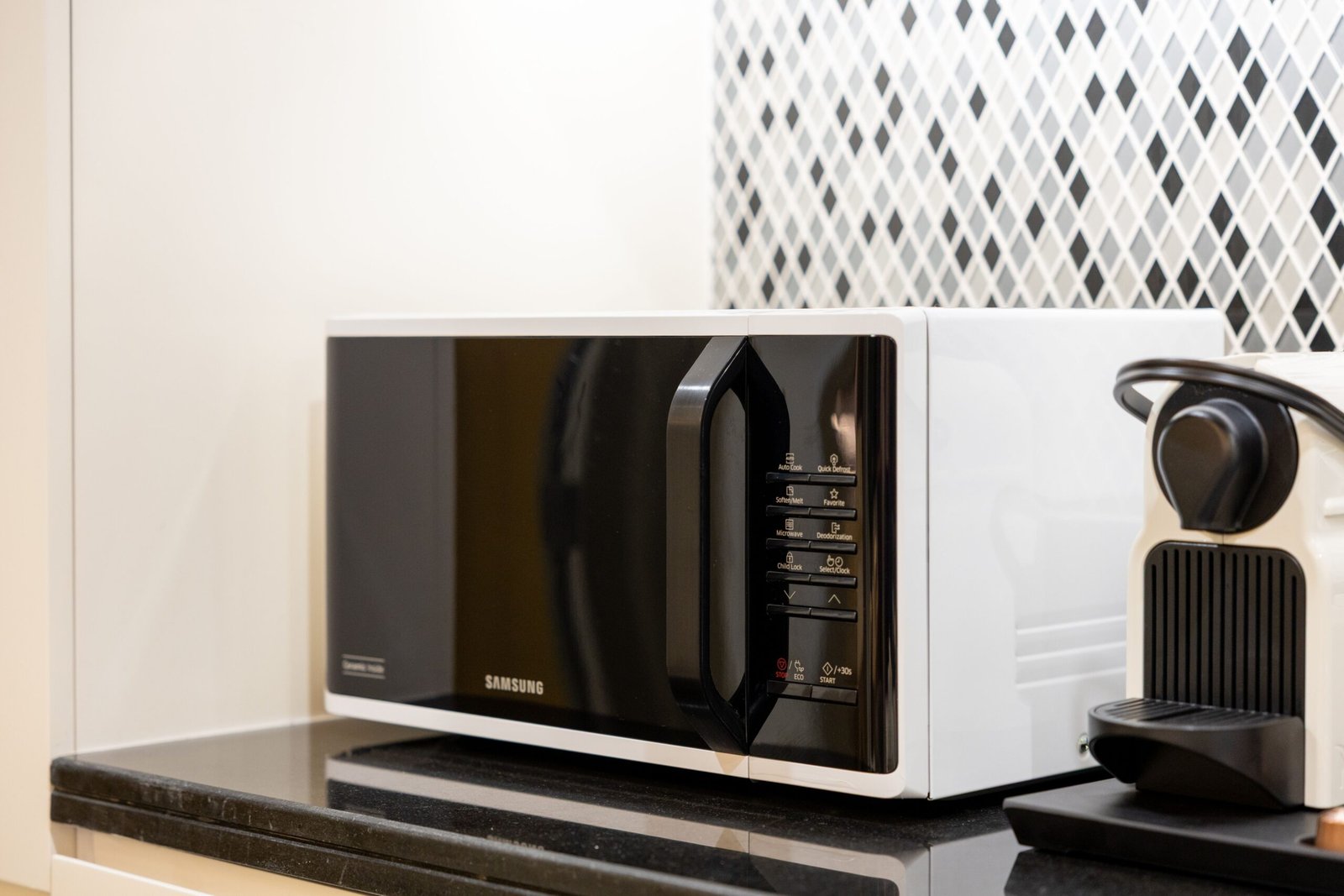
The difference that changes the decision
A conventional microwave heats food using electromagnetic energy. An air fryer uses rapidly circulating hot air. Maytag’s comparison identifies quick reheating and defrosting as microwave strengths and crisping as an air-fryer strength. A convection or combination microwave is a separate case because it adds cooking modes beyond conventional microwaving. Maytag’s appliance comparison.
Here is how we would turn that distinction into a shopping decision:
| Your recurring need | Start by investigating | The question to answer |
|---|---|---|
| Warm soup or a moist leftover meal | Microwave | Does your usual bowl fit and suit the appliance? |
| Restore a crisp exterior | Air fryer | Can the intended food fit without an impractical number of batches? |
| Defrost as part of meal preparation | Microwave with a suitable function | What do the food and appliance instructions require? |
| Handle both jobs with one machine | Combination model | Are both modes present, and is the complete unit practical? |
| Replace an appliance you already own | Identify its actual weekly jobs first | Which of those jobs would remain unsolved? |
These are category-level starting points, not model performance rankings.
Start with your last seven dinners
Write down what you heated recently. Include the unglamorous jobs: yesterday’s dinner, a bowl of soup, or a quick meal between other tasks. Then separate the occasions when crispness mattered from the occasions when you simply wanted food warmed conveniently.
This exercise keeps the purchase grounded. A machine can be excellent at something you rarely do and still be a poor use of your limited counter space.
If most of your list falls into the microwave column, buying an air fryer may complement your routine without replacing the microwave. If you already have an easy way to handle those jobs and mainly want a crisp finish, the balance can shift.
Do not count a hypothetical future cooking habit as heavily as something you do several times a week. You can expand your equipment later when the need becomes real.
Reheating is not one single task
The word “leftovers” hides different goals. You may want a moist dish warmed through, or you may want a previously crisp surface restored. Those are different reasons for choosing a heating method.
KitchenAid’s comparison makes the same broad distinction: conventional microwaving suits quick warming, while air frying can provide a crisp exterior. It does not establish one universal winner for every leftover. KitchenAid’s reheating comparison.
For buying purposes, decide which result you care about most. For actual cooking, follow appropriate food and appliance instructions rather than assuming a method or time transfers directly from another machine. Surface appearance alone should not become your test of whether food is properly heated.
We have intentionally not supplied a universal reheating time. Portion, starting temperature, food, and machine settings all matter, and this is a buying comparison rather than a tested recipe.

Compare the container you use, not just the advertised capacity
Measure your usual dinner plate or bowl and check the relevant interior dimensions. For an air fryer, examine the usable basket or tray layout for the food you intend to cook. For a microwave, check the usable cavity and any turntable arrangement.
An external measurement tells you whether the appliance can occupy a spot. It does not tell you whether the food and cookware you actually use will work inside it.
Also include operating clearance and access. A door or drawer that opens into your only prep area can be inconvenient even if the closed appliance fits perfectly. Use the manufacturer’s installation requirements rather than a generic clearance rule.
Our compact microwave guide and compact air fryer guide provide the next step once you have chosen the function you need.
A combination microwave needs a closer look
One housing can contain multiple cooking functions, but the word “combination” is not enough information. Confirm which modes are present, what accessories they require, and whether the controls make sense for the tasks you repeat.
Do not assume every accessory or container can be used in every mode. Follow the exact appliance instructions when switching functions.
Ask whether combining appliances creates a new scheduling problem. If you often want to warm one dish while crisping another, one shared cavity may mean doing those tasks sequentially. That is a workflow trade-off to consider, not a claim about every combination product.
Before paying more for additional modes, write down the specific appliances or tasks they would replace. An unused feature does not create extra space by itself.
Which uses less electricity?
Do not choose from wattage alone. Energy use depends on power over time, the selected mode, preheating where applicable, and how many batches are needed. We do not have measurements that establish a universal category winner.
For a meaningful comparison, the task must be equivalent: the same useful amount of food reaching a suitable result. Comparing a short warm-up with a longer crisping cycle answers two different questions.
If energy cost is your deciding factor, seek exact-model measurements for your task. Otherwise, prioritize whether the appliance performs the job you need; a lower-rated device that does not fit your routine can still be the wrong purchase.
If you already have one, try this before buying the other
Keep a short list of tasks your current setup handles badly. Be specific. “I want crisp reheated food” is actionable. “I want something more versatile” is harder to evaluate.
Then decide whether those tasks justify another appliance, a replacement, or simply a different use of equipment you already own. Consider cleanup, storage, and the space needed during operation along with cooking capability.
If a toaster oven is also part of your shortlist, use our separate air fryer versus toaster oven comparison. That is a different overlap from conventional microwave reheating.
Our recommendation for a small kitchen
Keep or buy the microwave when it handles your most frequent warming jobs. Choose an air fryer when crisping is the missing capability you genuinely want. Consider a combination unit only after checking its modes, capacity, accessories, and workflow.
The goal is not to own the trendiest appliance. It is to avoid removing the one that quietly does most of your everyday work.
Evidence note: This guide combines manufacturer explanations with editorial buying analysis. We have not conducted side-by-side timing, energy, or food-quality tests, and no specific model is ranked or recommended here.