
Which Compact Microwave Actually Fits a Small Kitchen?
· NookPrep Editorial Team

Every inch of countertop space is precious when dealing with a small kitchen, making bulky appliances feel like unwanted roommates. If you are tired of countertop-space anxiety but still need a quick way to reheat leftovers or make a late-night snack, a compact microwave is the perfect compromise. The best compact microwaves for small kitchens balance a tiny external footprint with just enough usable interior capacity to fit a standard dinner plate. Before sacrificing your prep space to an oversized machine, you need to know exactly which dimensions and specifications actually matter for tight quarters.
Shop Compact Microwaves on Amazon
Two actual 0.7-cu-ft microwaves worth comparing
Before buying, compare a real model against the space on your counter. These are published-specification examples, not NookPrep hands-on test winners. Both offer roughly 17.3-inch width, a 10-inch turntable and 700W microwave cooking output; check the required ventilation clearance before deciding.
COMFEE EM720CPL-PMB
Best to investigate for: someone who wants a sound-off setting and straightforward one-touch reheating in a small unit.
Manufacturer-listed 0.7 cu ft, 17.3 W × 13 D × 10.2 H inches, 10-inch turntable. Listed input is 1,050W; advertised cooking output is 700W. These are different ratings.
BLACK+DECKER EM720CB7
Best to investigate for: a stainless-look alternative with the same nominal cavity class and documented electrical figures.
Manual-listed 0.7 cu ft, 17.3 W × 13 D × 10.2 H inches, 10-inch turntable, 700W output and 1,050W input. Make sure the hinge side can fully open.
Disclosure: As an Amazon Associate, NookPrep earns from qualifying purchases. Links are for comparing current U.S. offers; seller, price and stock may change. We have not tested these units ourselves.
What Makes a Microwave Truly “Compact”?
Most standard countertop microwaves sit around 1.1 to 1.5 cubic feet, which can easily devour an entire corner of your kitchen. Compact models, on the other hand, range from 0.5 to 0.9 cubic feet. There is no universal maximum width or depth: compare each model’s cabinet size with its ventilation clearance, door opening and usable turntable.
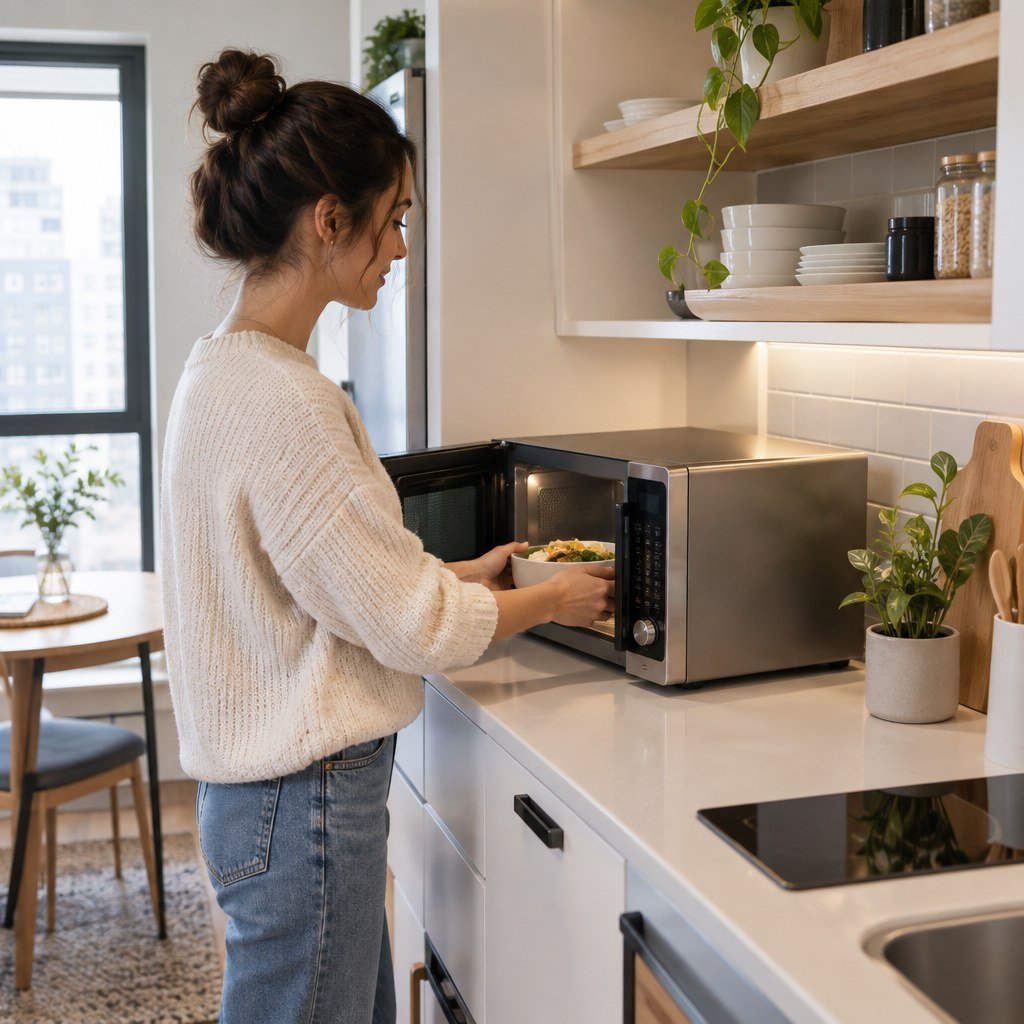
When deciding which appliances are worth counter space, finding a microwave that hugs the wall or sits seamlessly beneath low cabinets is critical for apartments, studio setups, dorm rooms, and RVs. Size is not just about the footprint on your counter; it is about how the appliance integrates into your daily workflow without getting in the way.
5 Features That Matter Most in a Small Microwave
Let’s break down the essential design elements you need to evaluate before bringing a new heating appliance into a cramped cooking environment.
1. External Footprint vs. Usable Interior
The biggest trap in buying a small appliance is getting one with thick exterior walls that shrink the inside cavity too much. Always look at the turntable diameter. You want a microwave that is small on the outside but still has an interior glass plate large enough—usually around 9.5 to 10 inches—to comfortably hold a standard dinner plate, a tall coffee mug, or your favorite soup bowl.
2. Wattage and Realistic Cooking Expectations
Compact microwaves usually top out between 700 and 900 watts. While 1,000 watts is standard for larger models, a microwave with a lower cooking-output rating can still reheat food, but cooking time depends on portion size, food type and starting temperature. Follow the manufacturer’s instructions and check that food is heated safely; do not assume a universal extra 20 or 30 seconds.
3. Door Clearance and Hinge Design
In tight spaces, the way the microwave door swings open matters immensely. A thick door that requires a wide arc can bang into your sink, refrigerator, or adjacent cabinets. Look at the exact door swing and required side clearances in the model’s installation instructions. A tight side wall may prevent the door from opening comfortably; never assume a zero-clearance hinge unless the manufacturer documents it.
4. Control Panel Layout
Microwaves traditionally have side-mounted control panels, which adds unnecessary width to the machine. Some of the best compact designs put the controls underneath the door. This bottom-control layout maximizes the width of the heating cavity while keeping the appliance slim enough to squeeze between other kitchen essentials, like a compact toaster oven or a slim drip coffee maker.
5. Ventilation Requirements for Tight Corners
You cannot simply shove a microwave into a tight cubby without considering basic airflow. All microwaves need ventilation to prevent dangerous overheating. Always check the manufacturer’s clearance requirements for the top, back, and sides. Some compact models feature directed front or bottom venting specifically designed for under-cabinet shelves or enclosed pantry placement.
Tradeoffs for Apartments, Studios, and Dorms
Living with a small microwave requires a slight shift in expectations. You will not be roasting whole chickens or reheating massive family-sized casseroles. For dorms, studios and RVs, compare the manufacturer’s specified electrical input requirements with the available outlet and circuit. Advertised microwave cooking output (for example, 700 W) is not the same as electrical input draw, so the output rating alone cannot confirm safety or circuit compatibility.
Quick Buyer Checklist for Small Kitchens
Turntable Size
Ensure the glass plate is at least 9.5 inches across to comfortably accommodate standard dinner plates and bowls.
Power Draw
Check the exact model’s electrical input, instructions and circuit requirements. A 700 W cooking-output rating does not guarantee that a circuit will support the appliance.
Clearance Needs
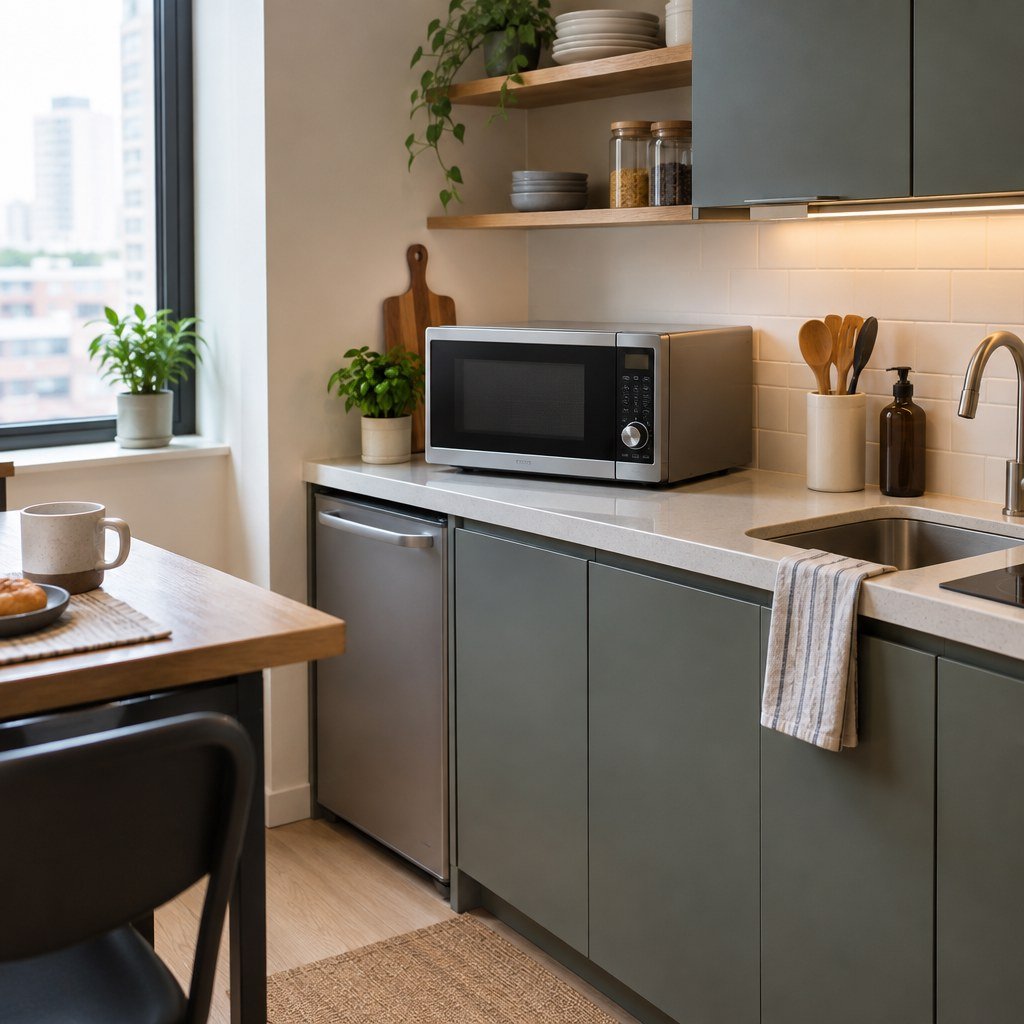
Measure the exact depth of your counter space and check the manufacturer’s rear ventilation gap requirements.
The Final Verdict
Reclaiming your limited countertop space does not mean you have to give up modern cooking conveniences. By focusing on models that offer a smart balance between internal plate capacity and external dimensions, you can easily maintain a clutter-free kitchen. Prioritize a compact unit with suitable side-venting and a simple control panel to ensure it seamlessly integrates into your apartment or studio without overwhelming your daily food prep area.
Optimize Your Small Kitchen Setup
Ready to save even more counter space? Discover our top tips for organizing compact kitchens and finding appliances that truly earn their keep.
Ready to compare actual models? Revisit the COMFEE EM720CPL-PMB or BLACK+DECKER EM720CB7 product pages. Check the precise variant, installation clearances, seller and return terms rather than buying by cu.ft. alone. As an Amazon Associate, NookPrep earns from qualifying purchases.
1 thought on “Which Compact Microwave Actually Fits a Small Kitchen?”
Comments are closed.