
Countertop Dishwasher Not Drying Dishes? Stop Hand-Drying Every Load and Check These 6 Causes
· NookPrep Editorial Team
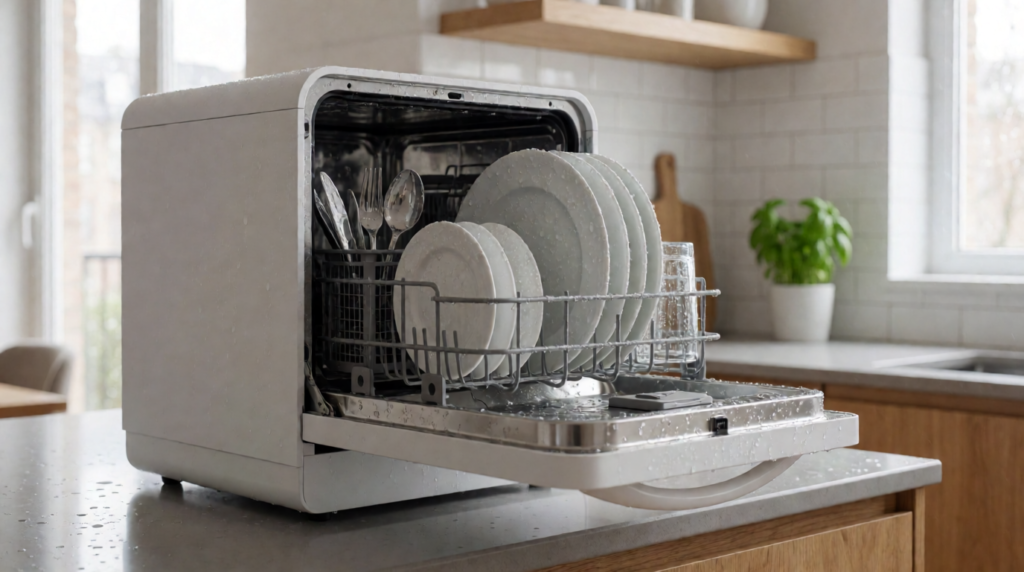
You bought a countertop dishwasher to stop doing dishes by hand—not to add a second job with a towel after every cycle. If plates are clean but still wet, the machine may not be failing at all. Small countertop units have less internal volume, lighter racks, more plastic-heavy loads, and often simpler drying systems than full-size machines. That combination makes trapped water and weak evaporation much more noticeable.
The fastest way to solve the problem is to separate normal moisture from fixable loading and cycle mistakes from a real drying-system fault. This guide gives you a six-check sequence so you can diagnose the problem before replacing the machine.
Quick answer: check these six things in order
- Confirm you are using the strongest available dry setting.
- Check whether rinse aid is empty or set too low.
- Angle cups, bowls, and containers so water can drain.
- Reduce crowding so hot air can circulate.
- Separate “plastics stay wet” from “everything stays wet.”
- If the tub never feels warm after a heated cycle, investigate the drying system or service path.
This order matters. It starts with the easy, reversible causes and only moves toward a hardware problem when the evidence points there.
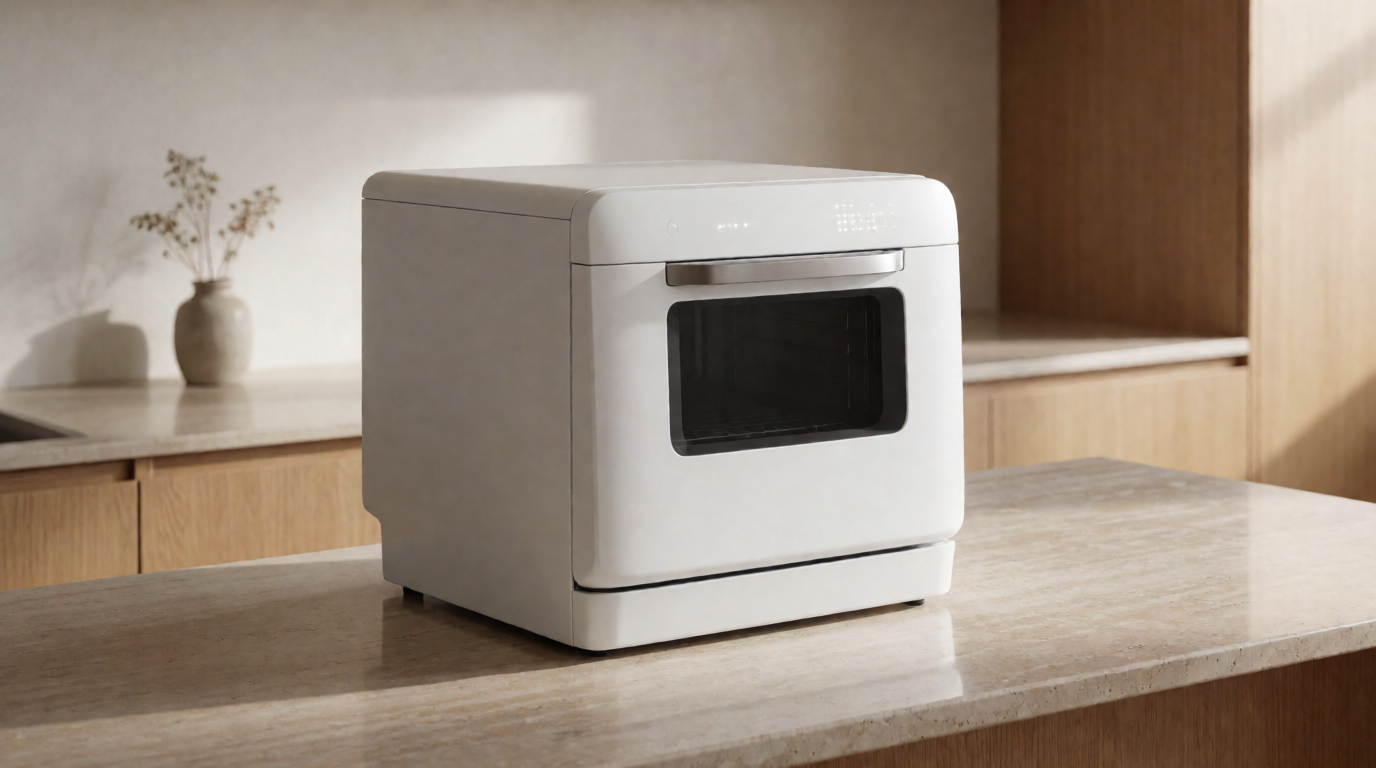
Why countertop dishwashers can look “bad at drying” even when they are working
Drying is not just about blowing hot air. Water first has to leave the surface of the dishes. A mug with a recessed base can hold a tablespoon of water even if the rest of the load is nearly dry. Plastic also tends to retain less heat than ceramic or glass, so droplets can remain long after heavier dishes feel dry.
That means the useful question is not simply “Are the dishes wet?” It is: what is wet, where is the water pooling, and does the machine generate warmth at the end of the cycle?
The NookPrep Drying Diagnosis: Drain → Heat → Airflow → Surface
Use this four-part framework before changing detergents, buying accessories, or replacing the unit.
| Check | What you are looking for | What it suggests |
|---|---|---|
| Drain | Water sitting in cup bases, lids, bowls | Loading angle or shape problem |
| Heat | Dishes/tub feel warm after heated cycle | Drying system is probably operating |
| Airflow | Rack is packed tightly or items touch | Moist air cannot escape surfaces easily |
| Surface | Mostly plastics remain wet | May be normal material behavior rather than failure |
1. Make sure the cycle is actually trying to dry
Eco, quick, and air-dry modes may use less heat or less drying time. If your countertop model offers a heated, extended, fan, or door-open dry option, compare results using that setting before diagnosing a fault.
Whirlpool’s dishwasher guidance also notes that heated/extended drying settings and rinse aid can materially improve drying performance. Model names differ, so use your own manual for the exact control.
2. Check rinse aid before changing detergent
Rinse aid helps water sheet off surfaces instead of forming stubborn droplets. If your machine has a dispenser and it is empty, the difference can be obvious—especially on glassware and stainless surfaces.
Do not jump straight to the maximum setting. Increase gradually if your manual allows adjustment and evaluate a few loads. The goal is better drainage, not simply “more chemical.”
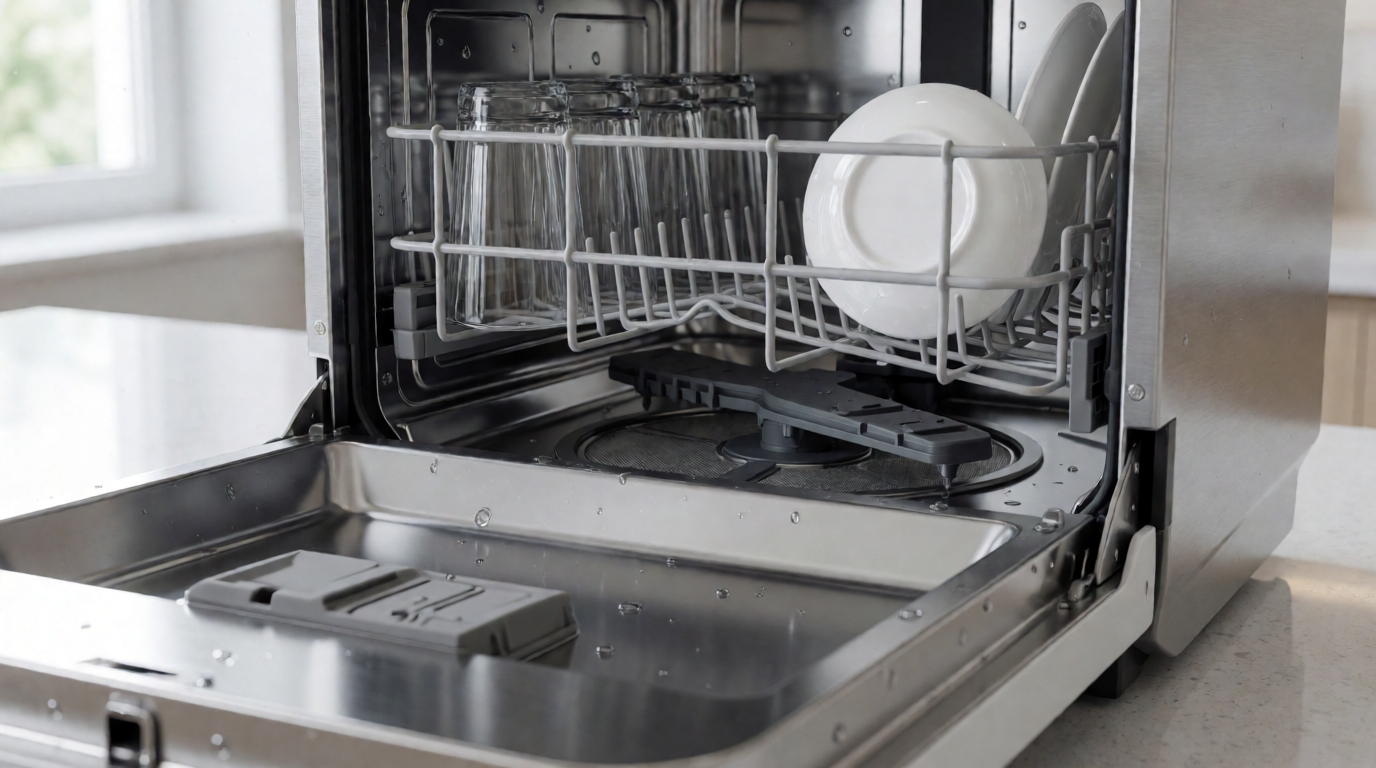
3. Stop loading bowls like storage containers
In a tiny machine, every centimeter of rack space feels valuable, which makes overpacking tempting. But a perfectly packed rack can be a terrible drying rack.
Angle concave items downward. Avoid flat lids that create a shallow pool. Give cups and bowls enough clearance that water has somewhere to run. If a container leaves the dishwasher with a puddle on its base, the drying system cannot evaporate water that never drained.
4. Use the “plastic-only test”
Run a normal mixed load and look at what remains wet. If ceramic plates and glassware are mostly dry while plastic containers are still covered in droplets, that points away from a total drying failure.
If everything is cold and wet after a heated cycle, that is different. Check the manual’s troubleshooting procedure, error indicators, or service guidance rather than repeatedly changing how you load the rack.
5. Open-door drying can help—but follow the manual
Some machines intentionally vent moisture or recommend opening the door after the cycle. Others have their own automatic venting sequence. Do not interrupt a model-specific drying cycle just because another dishwasher behaves differently.
If your manual permits it, cracking the door after the cycle can release humid air. This can be particularly useful in a small appliance with a compact tub.
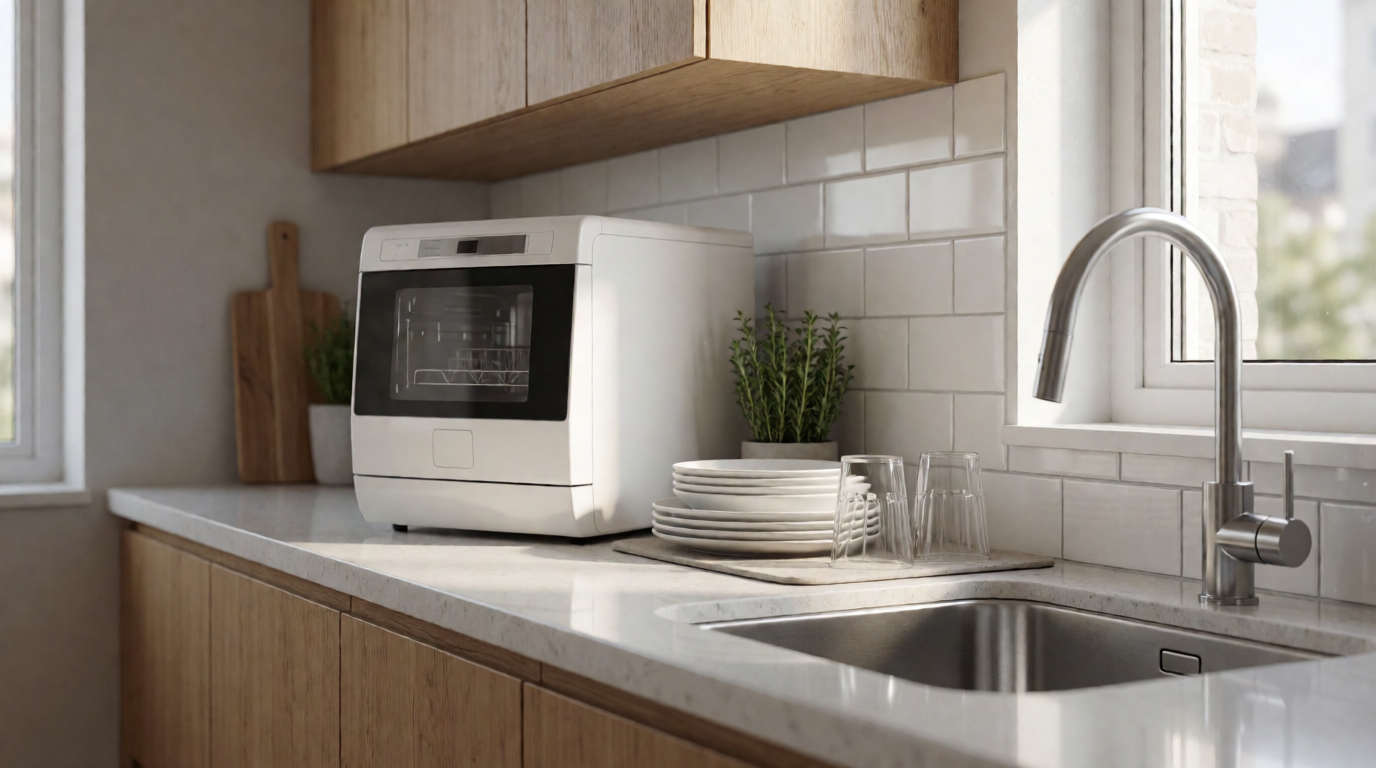
6. Know when it is no longer a loading problem
There is a point where optimization becomes wasted effort. If the machine previously dried reasonably well and now the entire load stays cold and wet, if error codes appear, or if a heated cycle produces no warmth, move from “usage troubleshooting” to model-specific service diagnostics.
What not to do
- Do not assume every wet plastic item means the dishwasher is defective.
- Do not keep increasing detergent to solve a drying problem.
- Do not block spray or airflow just to fit one more bowl.
- Do not copy heating-element tests from another brand without checking your manual.
Browse countertop dishwashers on Amazon
Conclusion: diagnose the moisture pattern before replacing the dishwasher
A countertop dishwasher that leaves dishes wet can be annoying, but the moisture pattern tells you a lot. Start with cycle choice, rinse aid, drainage angles, and rack spacing. Then separate plastic-only moisture from an across-the-board lack of heat.
If space is the bigger problem—not drying alone—see our countertop dishwasher guide for small kitchens and our countertop dishwasher dimensions guide before replacing the unit.
FAQ
Why are my plastic dishes still wet when glass is dry?
Plastic generally retains less heat than glass or ceramic and often has shapes that trap droplets. If mostly plastics remain wet while heavier dishes dry, that does not by itself prove the drying system has failed.
Does rinse aid really help dishes dry?
It can. Rinse aid reduces the tendency of water to bead on surfaces, helping water drain away so there is less moisture left for the drying stage to remove.
When should I suspect a real dishwasher fault?
If a model that previously dried normally suddenly leaves the entire load cold and wet after a heated cycle, or shows error codes, use the model-specific troubleshooting and service guidance.
Sources & methodology
This article is research-based and does not claim hands-on testing of a specific dishwasher. We cross-checked general drying guidance against Whirlpool dishwasher drying guidance and then translated those principles into a small-kitchen diagnostic sequence. Always follow the manual for your exact model.
1 thought on “Countertop Dishwasher Not Drying Dishes? Stop Hand-Drying Every Load and Check These 6 Causes”
Comments are closed.