
Air Fryer Food Still Soggy? These 5 Mistakes Can Ruin Crispness Before the Timer Ends
· NookPrep Editorial Team
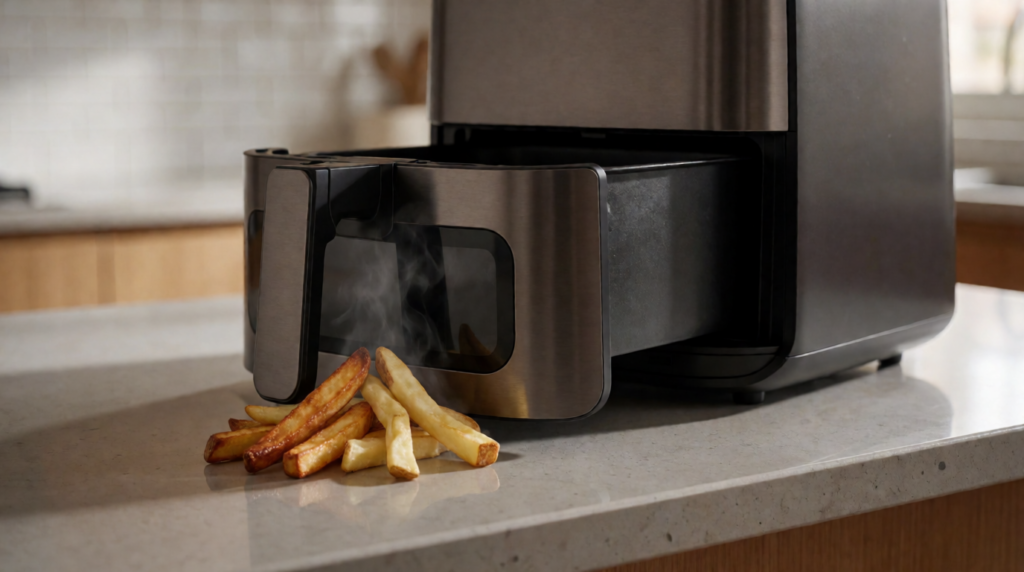
If your air fryer keeps giving you hot food instead of crisp food, the problem may start before you press Start. Adding more time often makes the outside drier while the center stays soft, and turning the temperature up can push you straight from pale to burnt.
Air fryers depend on moving hot air around exposed food surfaces. In a small basket, moisture and crowding can defeat that airflow quickly. Before blaming the appliance, check the variables that actually control browning.
Quick answer: fix these five variables first
- Surface moisture
- Basket crowding
- Airflow under the food
- Food spacing and turning
- Cooking time/temperature matched to the food thickness
Think of crispness as a race: water must leave the surface before the food overcooks.
The NookPrep Crispness Rule: Moisture × Exposure × Airflow
For small air fryers, three factors explain most disappointing results:
| Factor | Bad setup | Better setup |
|---|---|---|
| Moisture | Wet surface, excess marinade | Drain/pat surface when appropriate |
| Exposure | Food stacked or overlapping | More single-layer contact with moving air |
| Airflow | Basket/crisper plate blocked | Use the intended basket or crisper plate correctly |
If two of the three are poor, adding another five minutes rarely fixes the underlying problem.
1. Stop putting surface water into a crisping machine
Fresh vegetables, thawed frozen food, and marinated ingredients can carry a surprising amount of water. As that water evaporates, the basket becomes a humid environment. The air fryer has to remove that moisture before browning can really progress.
When the recipe allows it, drain excess liquid and pat the outer surface dry. Do not do this blindly with foods that need a wet batter or sauce; the point is to remove unnecessary water, not redesign the recipe.
2. One full basket can cook worse than two smaller batches
This is the small-air-fryer trap: the basket looks big enough, so you fill every gap. But volume is not the same as usable crisping area. Overlapping pieces shield each other from the moving air.
For a tiny kitchen, batch cooking sounds inconvenient—but two short batches can deliver better texture than one crowded batch that needs repeated extra time.
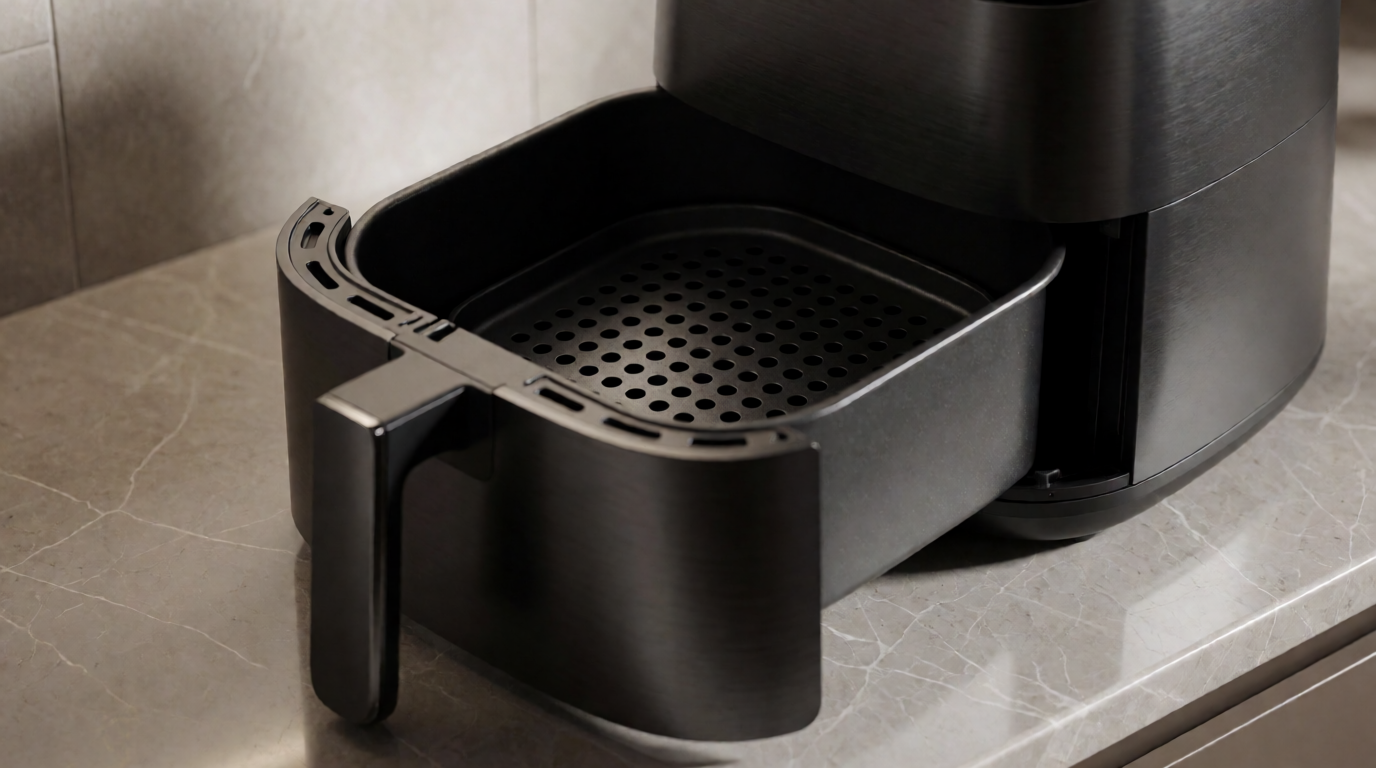
3. Use the crisper plate or rack the way the manufacturer intended
Many basket air fryers use a raised plate so air can move underneath the food. Ninja’s AF100 guidance, for example, says the crisper plate elevates food so air can flow under it and recommends arranging ingredients in an even layer without overlapping for consistent browning.
If you line or cover the airflow path, you are changing how the machine was designed to circulate heat. If you use parchment, follow model and accessory instructions and never allow loose paper to contact the heating element.
4. Shake, flip, or rotate when the food shape calls for it
Airflow is not equally strong on every surface at every moment. Loose fries, vegetables, nuggets, and similarly shaped pieces often benefit from redistribution during cooking. A large solid piece may need flipping instead.
The rule is simple: if one side is physically hidden from the hot-air path, give it exposure during the cook.
5. Match heat to thickness instead of chasing a darker color
A thin snack can brown quickly. A thick frozen item may need enough time for the center to heat through before the exterior reaches the texture you want. If you simply raise temperature because food is pale, the surface can burn while the center is still catching up.
Check progress before the end of the cycle. Manufacturer guidance commonly recommends adjusting time and temperature based on browning rather than treating presets as immutable.
A simple test before you blame the air fryer
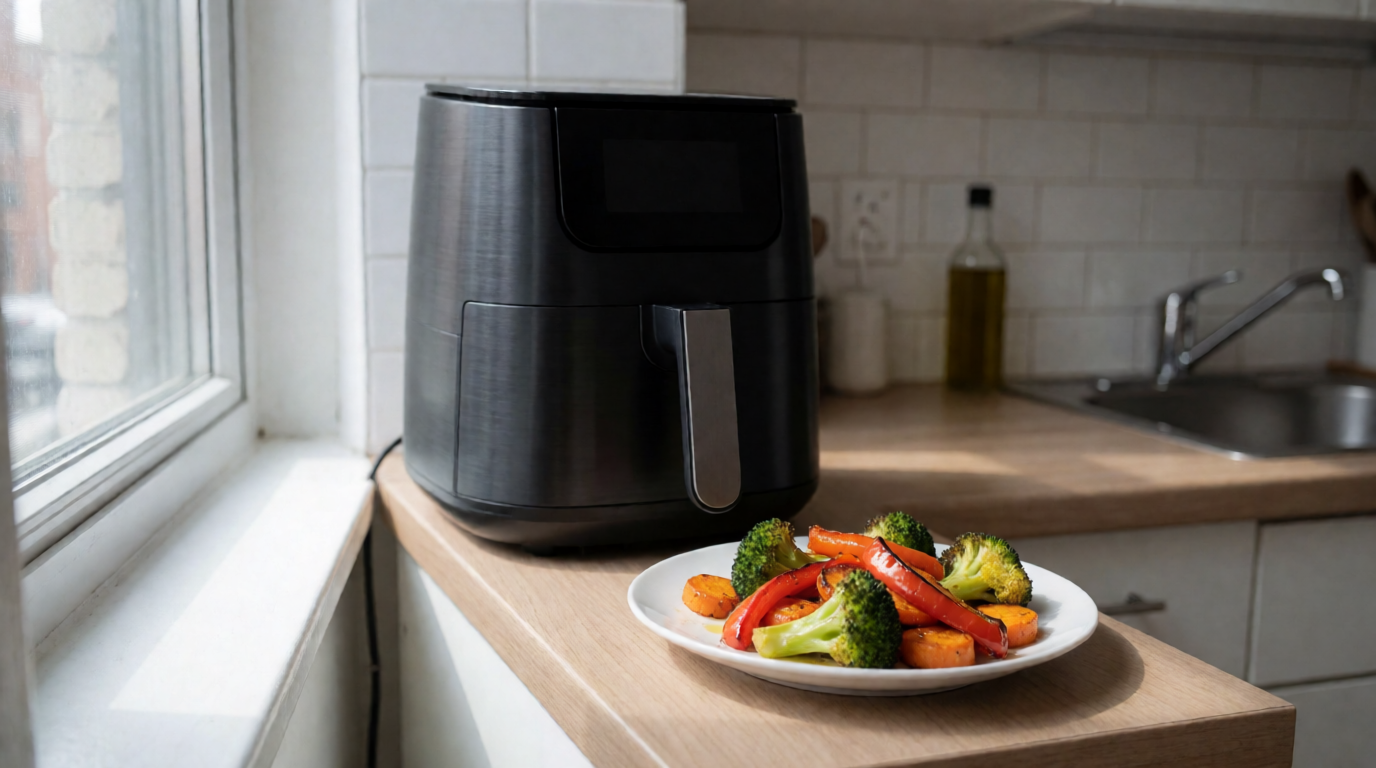
Cook a small, single-layer portion of a food you know normally crisps well. Use the intended basket/crisper setup and avoid excess surface moisture. If that small test browns normally, the appliance is probably capable of crisping and your usual load size or preparation is the stronger suspect.
What usually makes sogginess worse
- Adding more sauce before crisping is finished.
- Stacking food higher to “save time.”
- Blocking basket ventilation.
- Using the same time/temperature for every portion size.
- Continuing to cook after the outside is already dry just to fix a moist center.
Browse compact air fryers on Amazon
Conclusion: air fryers need exposed surface area more than they need extra minutes
If the food is hot but limp, think about moisture, exposure, and airflow before thinking about replacement. Those three variables explain why the same air fryer can produce crisp results with a small batch and soggy results when overloaded.
If your current model is simply too small for the portions you cook, compare our 2QT vs 4QT air fryer guide and compact air fryer picks for small kitchens.
FAQ
Why is frozen food soggy in my air fryer?
Surface ice, crowding, and overlapping pieces can create steam and reduce direct airflow. A smaller, evenly distributed batch often gives the hot air more access to each surface.
Should I always preheat an air fryer for crisp food?
Not every model or recipe requires preheating. Follow the manufacturer’s instructions and recipe guidance; the bigger universal variables are exposed surface area, airflow, moisture, and appropriate cook time.
Can too much oil make air-fried food less crisp?
Yes, excess liquid or oil can leave a wet coating and slow surface drying. Use only the amount appropriate for the food and recipe rather than assuming more oil produces more browning.
Sources & methodology
This guide is research-based. We used Ninja AF100 owner guidance for the airflow/crisper-plate and even-layer principles and translated them into a general troubleshooting framework. Follow the instructions for your exact model.