2-Cup vs 3-Cup Rice Cooker: Which Size Is Better for 1–2 People?
· NookPrep Editorial Team
Small-Kitchen Size Guide
A 2-cup rice cooker can be the smarter appliance for one person. A 3-cup model can be the better long-term buy for two. The catch is that the numbers on the box do not always describe capacity the same way.
2-cup vs 3-cup rice cooker: the capacity trap
The biggest mistake is assuming that a cooker labeled “2 cup” is only one cup smaller than a cooker labeled “3 cup.” That comparison can be misleading because manufacturers may use completely different definitions. Dash says its DRCM200 makes 2 cups of fully cooked rice. Zojirushi rates the NS-LGC05 at up to 3 cups of raw short-grain white rice, measured with an approximately 180 mL rice cup.
That means these two compact cookers are not separated by a simple 2-versus-3 ratio. They serve different use cases. The Dash is built around very small finished batches and minimal space. The Zojirushi is a substantially more flexible small-household cooker whose stated capacity begins before the rice absorbs water.
If you remember only one thing from this guide, make it this: compare the manufacturer’s capacity definition, not just the number printed in the product name.
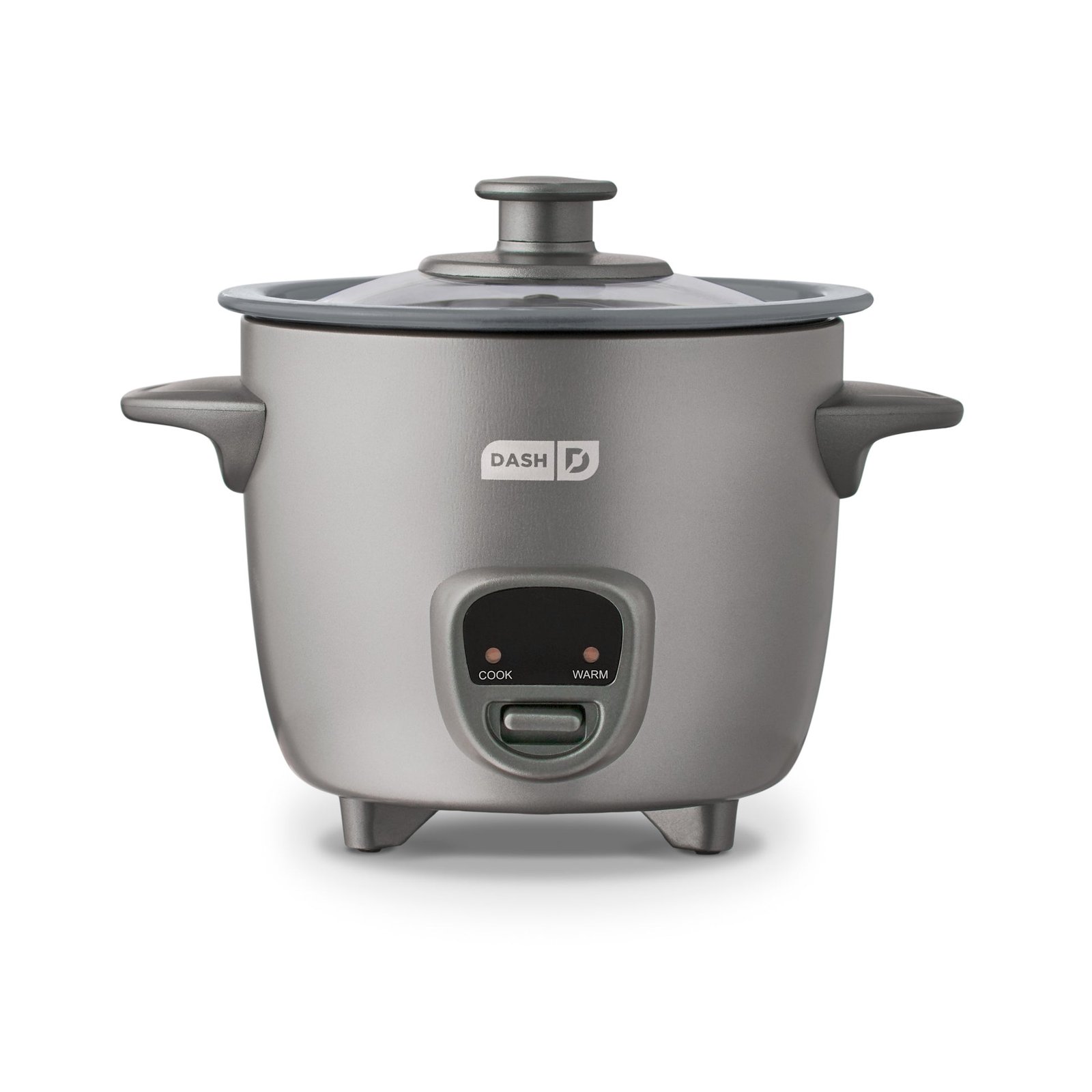
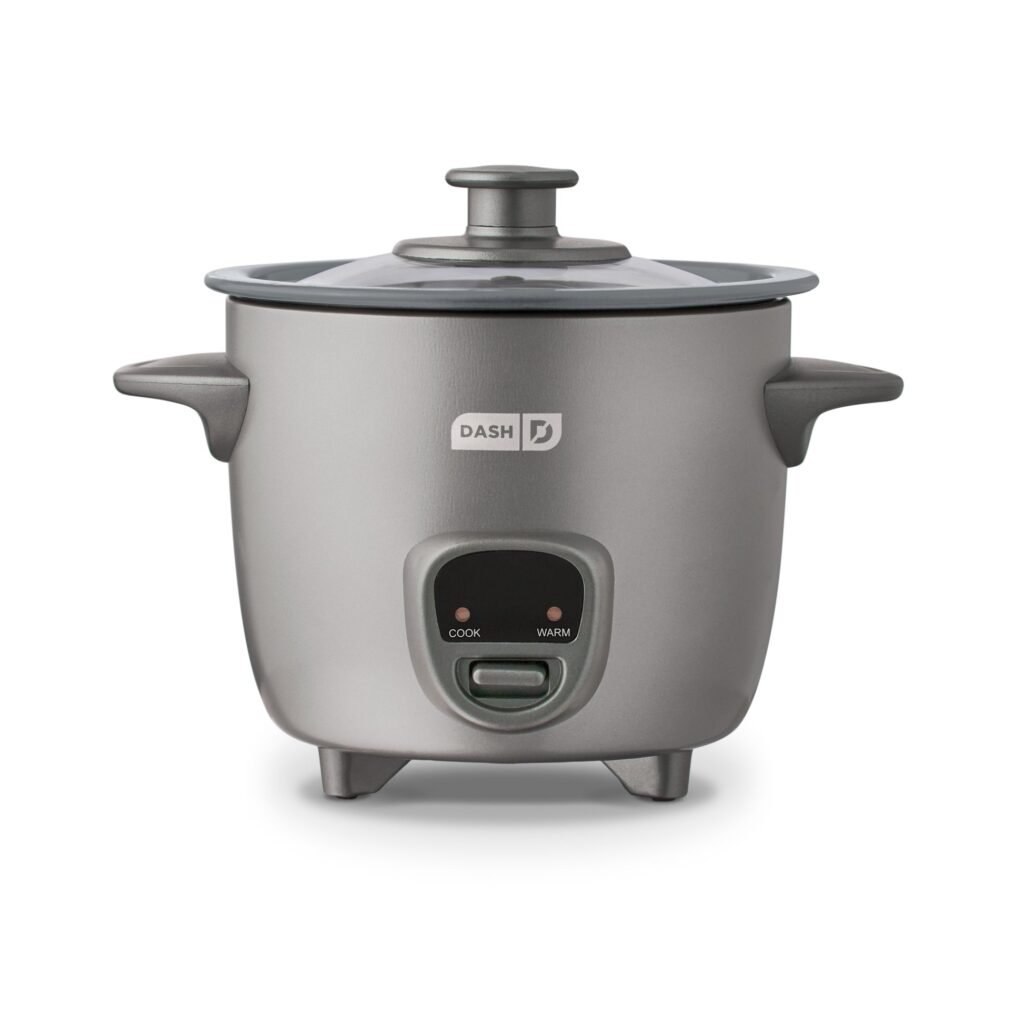
2-cup class: Dash DRCM200
Best for: one person, tiny apartments, very limited storage, simple white-rice meals.
Dash lists a 6.3 × 6.5 × 8.5-inch body and 200W power rating. Its appeal is not a long feature list. It is the ability to make a small batch without dedicating much counter or cabinet space to the appliance.

3-cup class: Zojirushi NS-LGC05
Best for: couples, frequent rice eaters, mixed grains, scheduled meals, and people who want room for leftovers.
Zojirushi rates this model at up to 3 cups / 0.54 L using its roughly 180 mL rice cup. It adds fuzzy logic, multiple rice programs, timer functions, automatic keep warm and reheating.
Which size is better for one person?
For a single person who normally cooks one fresh portion at a time, the smaller cooker has a strong practical advantage: it asks less of the kitchen. A compact machine is easier to leave out, easier to move, and easier to justify when every appliance competes for the same few feet of counter.
The Dash-style 2-cup cooked-rice format makes the most sense when your routine is simple. Think rice for dinner tonight, perhaps a little extra for lunch, rather than Sunday meal prep for the next four days. A basic one-touch design can also be a feature rather than a limitation if you do not care about brown-rice programs, timers, or texture customization.
But a solo household should not automatically choose the smallest machine. If rice is a daily staple, if you deliberately cook leftovers, or if you switch among white rice, brown rice, oatmeal and other grains, a 3-cup Micom cooker can earn its larger footprint through versatility. Zojirushi specifically says the NS-LGC05 can cook as little as half a cup of rice or oats, so buying more capacity does not necessarily mean you must cook large batches every time.
Which size is better for two people?
For most couples, the 3-cup class is the safer choice. Two people can easily turn a “perfectly adequate” small cooker into a frustrating appliance if both want generous servings, packed lunches, or leftovers. Extra headroom is especially useful when rice is the main carbohydrate rather than a small side dish.
The case for 2 cups becomes stronger when both people eat modest portions and storage is genuinely severe. In a studio or kitchenette where the cooker must disappear into a cabinet after every meal, saving several inches can matter more than having advanced controls. This is exactly why actual dimensions deserve as much attention as capacity.
For a couple with normal cabinet space, however, we would usually accept the larger footprint of a good 3-cup model. The flexibility is more valuable over time: dinner for two tonight, extra rice for fried rice tomorrow, or enough capacity when one guest joins you.
Counter space: where the smaller cooker wins
Dash lists the DRCM200 at 6.3 inches wide, 6.5 inches deep and 8.5 inches high. Zojirushi lists the NS-LGC05 at 9-1/8 inches wide, 11-7/8 inches deep and 7-1/2 inches high. The Zojirushi is still compact by rice-cooker standards, but it occupies meaningfully more counter depth.
That depth difference matters near a backsplash, under shallow upper cabinets, or on a narrow apartment counter. Before buying, put a sheet of paper or a piece of cardboard on the counter at the appliance’s stated footprint. If that rectangle blocks your cutting board, coffee station, or sink workflow, the cooker is too large for the way your kitchen actually works.
This is the same principle we use in our broader guide to which kitchen appliances are actually worth counter space: an appliance has to earn not only its purchase price but also the physical space it occupies.
Features: when 3 cups buys more than capacity
The Dash DRCM200 is intentionally simple: add rice and water, start cooking, and use the keep-warm function after the cycle. That simplicity reduces decision fatigue and makes the cooker approachable for a small routine.
The Zojirushi NS-LGC05 is a different type of product. Its microcomputer uses fuzzy logic to adjust cooking temperature and time. The published menu includes white/mixed rice, sushi rice, brown rice, GABA brown rice, long-grain white rice, steel-cut oatmeal and quick cooking. It also includes an LCD clock, timer, automatic keep warm and reheating.
If you use those functions, the larger cooker is not just “one cup bigger.” It is a more capable appliance. If you never use them, paying for and storing those capabilities may be unnecessary. This is why capacity should be the first filter, not the final buying criterion.
2-cup vs 3-cup rice cooker comparison
| Decision | 2-cup compact | 3-cup compact |
|---|---|---|
| Best household | Usually one person | Usually one to two people |
| Storage priority | Maximum space saving | More flexibility for more space |
| Leftovers | Limited | Easier to plan for |
| Controls | Often simple | Can include advanced programs |
| Main risk | Outgrowing the capacity | Buying features and footprint you do not use |
How much rice do you actually need?
There is no universal “cups per person” rule because appetites, cuisines and serving roles vary. Rice as a side dish is different from rice as the base of a bowl, curry or fried-rice meal. Instead of relying on a generic serving chart, watch your own routine for a week.
Measure how much uncooked rice you normally prepare, how often leftovers remain, and whether you intentionally want extra rice for the next day. Then compare that number with the manufacturer’s manual. This avoids the common mistake of buying for an imaginary maximum meal rather than the batch you cook 90 percent of the time.
Buy the 2-cup size if…
You live alone, usually cook fresh rice for one meal, have extremely limited counter or cabinet space, and value simple operation over programs. It is also attractive as a secondary cooker in an RV, dorm-style setup where appliances are permitted, office kitchen, or compact apartment.
Buy the 3-cup size if…
You regularly cook for two, want leftovers, eat rice frequently, prepare several grain types, or want scheduling and keep-warm features. A good 3-cup cooker is still a small appliance, but it gives you more room to grow without jumping to a family-size machine.
Our two reference picks
For the smallest footprint, the Dash DRCM200 is the clearer fit. Its value proposition is straightforward: a tiny body, a small finished batch, and simple controls. For greater flexibility, the Zojirushi NS-LGC05 is the stronger choice. It costs more space and typically more money, but its capacity definition, half-cup minimum, fuzzy logic, rice programs and timer make it much easier to recommend for a two-person household that cooks rice often.
For a deeper product-by-product breakdown, see our Best Mini Rice Cookers for Small Kitchens guide.
Frequently asked questions
Is a 2-cup rice cooker enough for two people?
It can be, but first check whether “2 cup” means cooked or uncooked rice. A cooker that makes two cups of finished rice is a much smaller proposition than one rated for two cups of raw rice. For couples who want leftovers, a 3-cup uncooked-rice model usually offers more useful headroom.
Is a 3-cup rice cooker too big for one person?
Not necessarily. Some 3-cup models are designed to handle small minimum batches. Zojirushi says the NS-LGC05 can cook as little as half a cup. For a solo buyer who eats rice often, the additional flexibility can justify the extra footprint.
Does a smaller rice cooker cook faster?
Do not assume it will. Cooking time depends on the heating system, rice program, grain and batch, not just exterior size. A basic small cooker and a fuzzy-logic cooker may follow very different cooking cycles.
What should I measure before buying?
Measure counter width and depth, available height with the lid open, cabinet storage dimensions, and the space required around the cooker for steam. Product dimensions are more useful than the marketing word “mini.”
Final verdict
For one person with a genuinely tiny kitchen, start with the 2-cup compact class. For two people, the 3-cup class is usually the better balance. The extra capacity gives a couple more freedom for portions and leftovers, while a well-designed 3-cup cooker can still fit a small kitchen.
The more important lesson is to ignore the headline capacity until you know how it is measured. Dash’s 2-cup claim refers to fully cooked rice; Zojirushi’s 3-cup rating refers to raw rice measured with an approximately 180 mL cup. Those labels are not directly comparable.
See our compact rice-cooker picks, with real dimensions, product photos, strengths, trade-offs and small-kitchen recommendations.
How we evaluated this comparison: NookPrep compared manufacturer-published capacity definitions, dimensions, power ratings, cooking features and small-kitchen use cases. We do not claim hands-on testing of these models. Read How We Review and our Editorial Policy.
2 thoughts on “2-Cup vs 3-Cup Rice Cooker: Which Size Is Better for 1–2 People?”
Comments are closed.