
Which Compact Food Processor Deserves Your Counter Space?
· NookPrep Editorial Team
NookPrep Best Picks
A full-size food processor can solve a five-minute prep job and then steal half a cabinet shelf for the rest of the week.
For a small kitchen, the better question is not which machine has the longest feature list. It is which compact processor can handle the jobs you actually repeat—onions, herbs, nuts, sauces, dips and small batches—without becoming another appliance you resent storing.
| Pick | Capacity | Why it stands out | Best for |
|---|---|---|---|
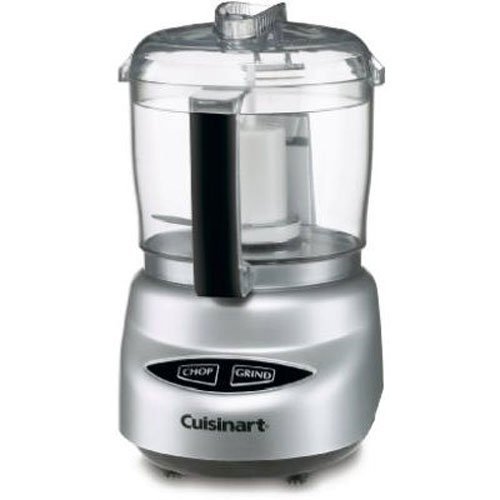
| Cuisinart Mini-Prep Plus | 24 oz / 3 cup class | 250W motor and auto-reversing chop/grind blade | Small-batch chopping and grinding |
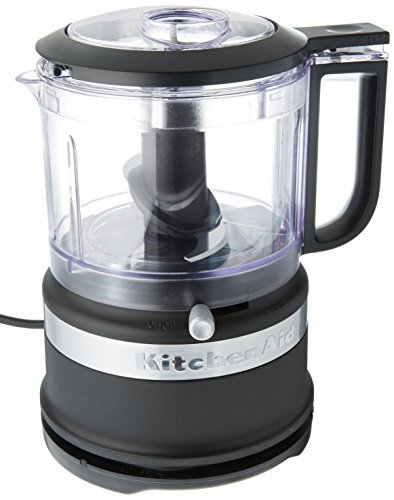
| KitchenAid KFC3516 | 3.5 cups | 2 speeds + pulse, drizzle basin, pour spout | Sauces, dips and everyday prep |
1. Cuisinart Mini-Prep Plus DLC-2ABC — Best overall for compact chopping and grinding
Check Cuisinart Mini-Prep Plus on AmazonView price →
The Cuisinart Mini-Prep Plus is the more interesting choice if your idea of a mini processor goes beyond simply mincing an onion. For a deeper look at capacity, cleanup, and daily small-batch use, read our full Cuisinart Mini-Prep Plus review. Cuisinart specifies a 24-ounce work bowl, a 250-watt motor and an auto-reversing SmartPower blade with sharp and blunt edges. That design gives the machine two distinct jobs: chop softer ingredients and grind harder ones without asking you to store a second blade.
That matters in a tiny kitchen because versatility is more valuable than raw capacity. A full-size processor earns its footprint by slicing, shredding, kneading and handling family-size batches. A mini processor cannot compete there. Its job is to replace repetitive knife work and small grinding tasks while staying easy enough to pull out for a Tuesday-night dinner. The Cuisinart makes a strong case because herbs, garlic, onions, nuts, hard cheese and small pesto-style batches all fall within the kind of work its blade system is designed to handle.
The dimensions are also genuinely small-kitchen friendly. Cuisinart lists the unit at roughly 5 inches long, 7 inches wide and 9.25 inches high. That is a much easier object to fit into a narrow cabinet, appliance garage or spare corner than a 10- to 14-cup machine. Dishwasher-safe removable parts also reduce the cleanup penalty that can make small appliances feel pointless.
- Compact footprint
- 250W motor
- Reversible chop/grind blade concept
- Dishwasher-safe removable parts
- Useful for harder ingredients as well as soft prep
- 24 ounces is still a small batch
- No slicing or shredding disc
- Not a dough machine
- Frequent large-volume prep will require multiple batches
Buy it if: you cook for one or two people, regularly chop aromatics, grind nuts or hard cheese, and want the smallest appliance that can cover several prep jobs.
Skip it if: your weekly prep means shredding blocks of cheese, slicing vegetables, kneading dough or processing large batches. In that case a 7-cup or larger processor is more honest about what you need.
2. KitchenAid KFC3516 — Best for sauces, dressings and controlled small-batch prep
Check KitchenAid KFC3516 on AmazonView price →
The KitchenAid KFC3516 takes a different approach. Instead of emphasizing grinding, it focuses on control and serving convenience. For the full small-kitchen breakdown, read our KitchenAid KFC3516 review. KitchenAid lists a 3.5-cup work bowl with a locking blade, handle and pour spout, plus two speeds and pulse control. The lid includes a drizzle basin so liquid can be incorporated gradually while processing.
That combination makes the KitchenAid especially logical for people who use a small processor for salsa, hummus, pesto, dressings, mayonnaise-style emulsions and chopped aromatics. The extra half-cup over a typical 3-cup mini processor is not transformative, but in this size class every bit of headroom helps. More important is the way the bowl is designed to move from processing to pouring without forcing you to fish a loose blade out first.
For a small apartment kitchen, the cord wrap is another boring feature that becomes surprisingly important. Counter clutter is often cable clutter. A compact appliance that stores its cord neatly is easier to put away vertically or tuck into a shallow cabinet without a plug constantly falling out.
The tradeoff is that this is still fundamentally a chopper, not a replacement for a full-size processor. KitchenAid describes it as a machine for chopping, mixing and pureeing. If your mental picture of a food processor includes a feed tube, slicing disc and shredded carrots dropping into a large work bowl, this is not that appliance.
- 3.5-cup bowl
- 2 speeds plus pulse
- Locking blade and pour spout
- Drizzle basin for emulsions
- Simple cord storage
- Still too small for bulk prep
- No slicing/shredding attachments
- Grinding is not its main advantage
- A larger processor is better for dough and big recipes
Buy it if: you make sauces, dips and dressings often and want more texture control than a one-button mini chopper.
Skip it if: you primarily need to grind hard ingredients or you already own a larger processor that is easy enough to access for small jobs.
Cuisinart vs KitchenAid: which compact food processor should you buy?
For most NookPrep readers, the decision comes down to the type of prep that annoys you most. If you hate chopping garlic, herbs and nuts and want a machine that can also tackle harder grinding jobs, the Cuisinart is the more versatile small-footprint tool. If your routine leans toward salsa, hummus, pesto, sauces and dressings, the KitchenAid’s larger 3.5-cup bowl, pulse control, drizzle basin and pour-friendly design make more sense.
Neither should be purchased because it is simply smaller than a full-size processor. Small appliances still create clutter if they duplicate work you already do easily. The right mini processor is the one that removes a repeated task from your week often enough to justify the shelf space.
Cuisinart Mini-Prep Plus: the stronger all-around choice for chopping + grinding in the smallest practical format.
KitchenAid KFC3516: the better choice for controlled chopping, purees, sauces and emulsions.
What size food processor actually makes sense in a small kitchen?
A 3- to 3.5-cup machine is best thought of as a prep accelerator, not a downsized version of a full food processor. It works when the ingredient quantity is small enough that you would otherwise reach for a knife, mortar, grater or immersion blender. That makes it particularly useful for one- and two-person households, where a 10-cup bowl can feel absurd for half an onion and a handful of herbs. If you are deciding whether you need a processor at all, compare the use cases in our portable blender vs mini food processor guide. If the choice is specifically between a simpler chopper and a processor, our food chopper vs food processor guide breaks down the job differences.
But compactness has a point of diminishing returns. If you repeatedly fill a mini bowl to the top, stop, empty it and run a second or third batch, the appliance is telling you that you bought the wrong size. For regular meal prep for a family, a 7-cup model is often a better compromise between storage and throughput.
What we look for in compact food processors
NookPrep evaluates small-kitchen gear around space efficiency first. We compare published manufacturer specifications, bowl capacity, controls, cleanup requirements, storage details and the tasks the product is actually designed to perform. We also look for compromises that matter in limited kitchens: extra attachments that need storage, awkward cords, oversized bases and capacities that are too small to be useful.
This is a research-based buying guide, not a claim that we personally performed laboratory testing on these two units. For more on our process, see How We Review and our Editorial Policy.
FAQ
Can a 3-cup food processor replace a full-size food processor?
Usually no. It can replace many small chopping, grinding, sauce and puree tasks, but it does not provide the capacity or slicing, shredding and dough functions associated with larger processors.
Is a mini food processor worth it for one person?
It can be especially useful for one person because ingredient quantities are naturally smaller. The value depends on whether you repeatedly prepare foods such as onions, garlic, herbs, nuts, dips, dressings or small sauces.
Which is better for a tiny kitchen: Cuisinart Mini-Prep or KitchenAid 3.5-Cup?
Choose the Cuisinart if compact chopping and grinding versatility is the priority. Choose the KitchenAid if you value a slightly larger bowl, pulse control, a pour spout and a drizzle basin for sauces and dressings.
Prices and availability can change. Product images are used to identify the products discussed; retailer/manufacturer usage terms should be reviewed as the site’s affiliate integrations expand.
4 thoughts on “Which Compact Food Processor Deserves Your Counter Space?”
Comments are closed.