
Three Tiny Kitchen Tools Can Save More Friction Than One Big Gadget
· NookPrep Editorial Team
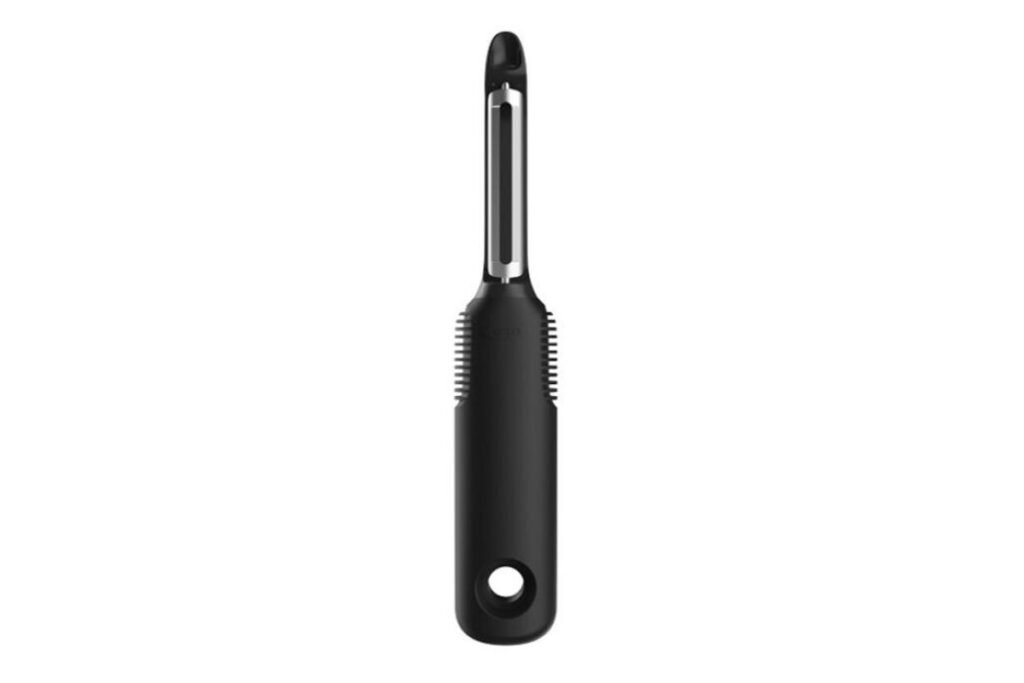
Small kitchens do not need fewer tools at any cost. They need fewer redundant tools. A compact gadget earns space when it removes a repeated motion, stays easy to clean, and does not duplicate something you already own. For this guide, three OXO tools solve three different jobs: the Good Grips Swivel Peeler removes skins, the Good Grips Garlic Press replaces fine mincing, and the Multi-Purpose Scraper & Chopper portions, scrapes, and transfers food across a cutting board.
Quick picks: choose the motion you repeat most
Best first purchase for most cooks — OXO Good Grips Swivel Peeler: tiny storage cost, frequent produce use, simple cleanup.
Best if garlic prep annoys you — OXO Good Grips Garlic Press: strong fit when you crush fresh garlic several times per week and dislike fine mincing.
Best for bakers and heavy board prep — OXO Multi-Purpose Scraper & Chopper: useful for dough, food transfer, and resetting a small cutting board quickly.
As an Amazon Associate I earn from qualifying purchases.
1. OXO Good Grips Swivel Peeler — the lowest-cost drawer commitment
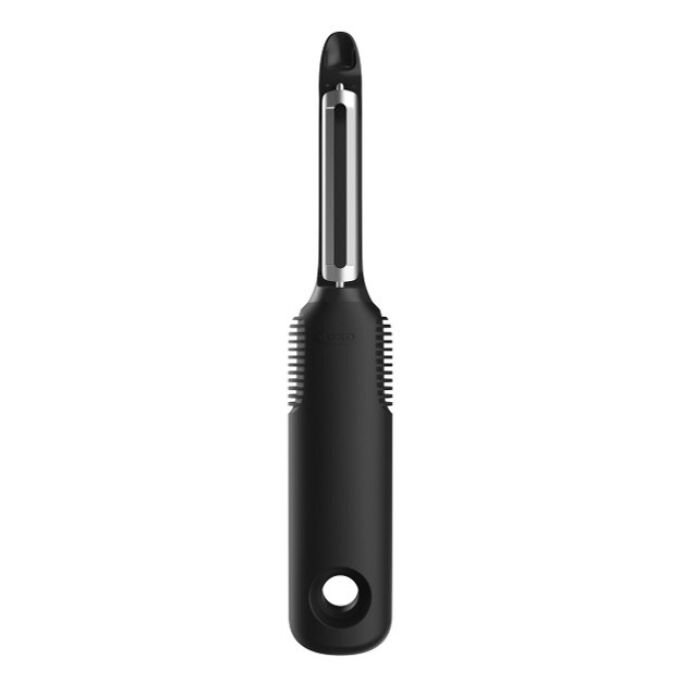
The swivel peeler is the easiest of these three tools to justify because the storage cost is so low and the use case is obvious. OXO uses twin Japanese stainless-steel blades that pivot with the surface of produce, a soft non-slip handle, and a built-in potato eyer. The tool is dishwasher safe and roughly seven inches long.
Its strongest reason to own it is frequency per cubic inch. Potatoes, carrots, apples, cucumbers, and other produce show up often in everyday cooking, yet the peeler asks for almost no counter or cabinet space. That is a very different ownership profile from a bulky spiralizer or multi-blade slicing system.
The limitation is grip preference. A straight swivel peeler is not automatically better than a Y-peeler. If your wrist feels more natural with a Y-shaped design, choosing the OXO simply because it is compact will not improve the task.
Best for: cooks who prepare fresh produce regularly and prefer a classic inline handle.
Skip if: you already own a sharp peeler you like or strongly prefer Y-peeler geometry.
Check the OXO Swivel Peeler on Amazon
Read the full OXO Swivel Peeler review for the grip, blade, cleanup, and storage decision.
2. OXO Good Grips Garlic Press — best when one tiny task slows dinner down
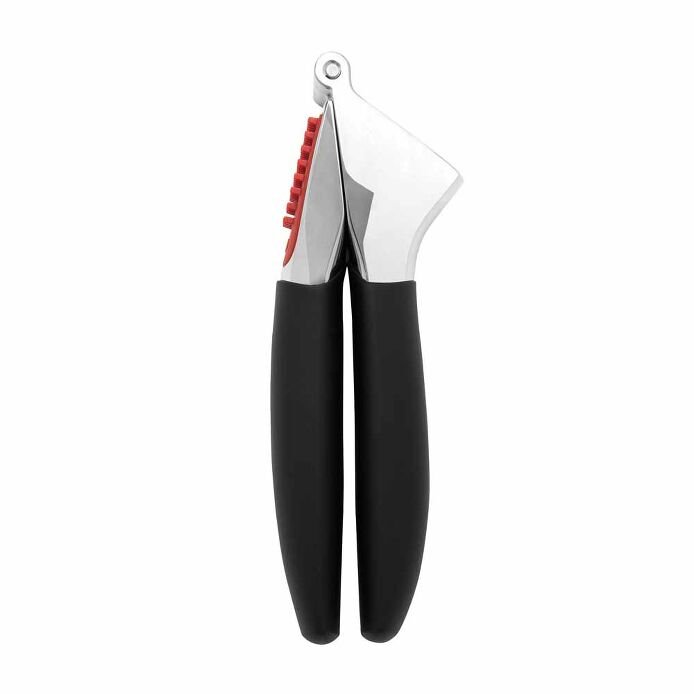
The garlic press is the most polarizing tool here because a chef’s knife can already prepare garlic. Its job is not to make a previously impossible task possible; it is to remove a task some cooks dislike. OXO’s model 11107400 uses a die-cast zinc body, a large garlic chamber, soft handles, and a built-in cleaner that pushes residue from the holes when the handles are reversed.
The strongest reason to own it is time saved on a task you actually repeat. If fresh garlic appears in dinner three or four nights per week, a quick squeeze can be more appealing than chasing sticky pieces around a board. If you use garlic once a month, the same press becomes a heavier object that needs washing and storage.
The trade-off is texture and cleanup. A press creates a fine crushed result, not neat slices or a custom mince. It also adds a separate item to wash. The built-in cleaner reduces the annoying residue problem, but it does not make the press self-cleaning.
Best for: frequent garlic users who want fine crushed garlic quickly.
Skip if: you prefer sliced garlic, already mince comfortably with a knife, or have limited squeeze strength.
Check the OXO Garlic Press on Amazon
See the full OXO Garlic Press review for the chamber, cleaner, grip, and knife comparison.
3. OXO Multi-Purpose Scraper & Chopper — best for workflow, not knife replacement
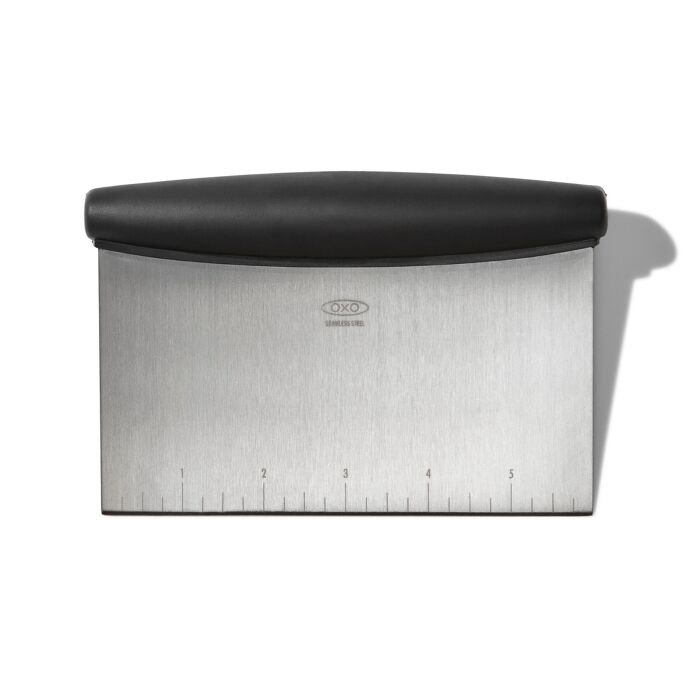
The scraper is the broadest workflow tool of the three. OXO builds model 73281 around a stainless-steel blade with quarter-inch measurement marks and a large non-slip handle. The company positions it for dough portioning, lifting cookies, cutting brownies, chopping firm vegetables such as celery, and scraping work surfaces.
Its strongest reason to own it is related-task overlap. It can do several jobs because those jobs all depend on the same wide flat edge. That is good multifunctionality: one physical design supports several closely connected motions without adding removable blades or attachments.
The trade-off is that “chopper” can sound more capable than the tool really is. It is not a replacement for a chef’s knife when you need precise dice, thin slices, or repeated cuts through dense produce. Its everyday strength is scraping, transferring, and portioning.
Best for: bread and pizza bakers, frequent vegetable prep, and cooks who want to move chopped food without using the side of a knife.
Skip if: you rarely work on a cutting board or expect a full vegetable-chopper replacement.
Check the OXO Scraper & Chopper on Amazon
Read the full Scraper & Chopper review for the dough, transfer, grip, and cleanup trade-offs.
Side-by-side decision table
| Tool | Primary job | Storage cost | Cleanup cost | Best frequency |
|---|---|---|---|---|
| Swivel Peeler | Remove produce skins | Very low | Low | Useful even at moderate frequency |
| Garlic Press | Crush garlic finely | Low to moderate | Moderate | Best for frequent garlic use |
| Scraper & Chopper | Scrape, transfer, portion | Low volume, wide shape | Low | Best for bakers or board-heavy prep |
The small-kitchen rule: buy by repeated motion, not by category
“Kitchen tools” is too broad to make a useful purchase decision. Instead, watch what your hands do during three ordinary dinners. Do you keep reaching for a knife just to remove potato skin? Do you avoid fresh garlic because mincing feels annoying? Do chopped vegetables scatter across the board while you make three trips to the pan? Those motions reveal which tool can remove friction.
This is more reliable than buying a gadget set because the set assumes everyone performs the same tasks with the same frequency. A studio cook who eats mostly one-pan vegetables may need a peeler and scraper but never a garlic press. Someone who makes garlic-heavy sauces may rank the press first.
Scenario A: you cook from fresh produce almost every day
Start with the swivel peeler. It is the most universally useful of the three because its job appears across many ingredients and the tool is easy to store. The built-in potato eyer also adds a related function without increasing the footprint.
Add the scraper second if you chop several vegetables at once. Moving a pile of diced food with a wide blade can keep a small cutting board usable and stop your chef’s knife from becoming a scoop.
Scenario B: you cook garlic-heavy meals several nights per week
Start with the garlic press if fine crushed garlic is the texture you usually want. The press has a clear job and the built-in cleaner addresses a category pain point. But be strict about frequency: a specialized tool earns space through repetition.
If you like sliced garlic, coarse pieces, or knife-minced texture, the press may not solve your actual need. Keep the knife and skip the gadget.
Scenario C: you bake bread, pizza, biscuits, or pastries
Start with the scraper & chopper. Dough portioning, bench cleanup, flour management, and lifting sticky dough all use the broad blade naturally. The quarter-inch markings are also most relevant in this scenario.
For a baker, this tool is less of a “gadget” than the garlic press because it fills a role a sharp knife does not perform as comfortably.
Scenario D: your drawer is already full
Do not buy any of them yet. Empty the drawer and group tools by function. If you find two peelers, several bottle openers, duplicate measuring sets, or novelty gadgets you never use, remove the redundancy first. Then decide whether one of these tools solves a recurring pain that remains.
An organizer can make clutter look neater, but it cannot turn unused tools into useful ones. If the drawer still needs structure after editing the collection, our OXO expandable drawer organizer review addresses that next layer.
Which tool gives the best value?
The peeler wins on broad usefulness. It is inexpensive in storage terms, has a clear task, and is easy to clean. Most kitchens that prepare fresh vegetables can justify one.
The garlic press wins on personal friction. It can be the most valuable tool of the three for someone who hates mincing garlic and cooks with it constantly, but the least valuable for someone who enjoys knife work.
The scraper wins on workflow coverage. It supports several related prep and baking tasks, which makes it unusually efficient when those tasks already exist in your routine.
What these three tools intentionally do not cover
This is not an “ultimate kitchen gadget” list. We excluded tools whose main value is electrical processing, large storage volume, or highly specialized output. A food processor, mandoline, immersion blender, or spiralizer can be excellent, but each changes the prep system more dramatically than these hand tools.
The goal here is a lean drawer: simple tools that can be picked up immediately, used for seconds or minutes, washed quickly, and put away without consuming working counter space.
How to avoid buying overlapping tools
Overlap is where small kitchens lose space. A garlic press and a microplane can both produce fine garlic. A scraper and flexible cutting board can both help move chopped food. A peeler and paring knife can both remove skin. Owning both can still make sense, but the second tool should be faster, safer, or more comfortable often enough to justify itself.
Use a seven-day test: notice which motions annoy you during one normal week. If the same workaround appears repeatedly, the dedicated tool has a real case. If the problem appears once, borrow the capability from a general-purpose tool you already own.
Cleaning should be part of the buying decision
A tool that saves thirty seconds of prep and adds two minutes of cleaning is not automatically efficient. The swivel peeler has the lightest cleanup burden and is dishwasher safe. The garlic press is dishwasher safe too, but garlic residue needs attention around the chamber and holes. The scraper is broad and simple, so rinsing and wiping are fast even after dough work.
That difference can change your ranking. People without a dishwasher may prioritize the peeler and scraper over the press because hand-cleaning complexity matters more in their kitchen.
Storage should be planned before purchase
The peeler fits almost anywhere, but sharp edges still deserve a consistent location. The garlic press is denser and thicker, so it needs a little more drawer height. The scraper has very little thickness but a wide blade, which can be awkward if the drawer is divided into narrow compartments.
Do not assume “small tool” means “easy to store.” Open the actual drawer and identify the slot first. If no safe location exists, either reorganize the drawer or skip the purchase.
Our one-minute decision
| If you say… | Start with… |
|---|---|
| “Peeling vegetables is annoying and my current peeler is dull.” | OXO Swivel Peeler |
| “I use garlic constantly and hate mincing it.” | OXO Garlic Press |
| “I bake or move chopped food off the board all the time.” | OXO Scraper & Chopper |
| “My drawer is full and I’m not sure what I use.” | Buy nothing; declutter first |
| “I already own good versions of all three.” | Keep what works |
FAQ
Which of these prep tools should a small kitchen buy first?
For most people, a good peeler is the easiest first purchase because it has a very low storage burden and applies to many ingredients. Frequency can change the answer: heavy garlic users may benefit more from a press, and regular bakers may benefit more from a scraper.
Do I need all three?
No. The point of this guide is to avoid checklist buying. Choose the tool connected to a repeated motion you actually perform.
Which one is easiest to clean?
The peeler and scraper have simpler exposed surfaces. The garlic press includes a built-in cleaner and is dishwasher safe, but its chamber and hole pattern still require more attention.
Are these tools replacements for a chef’s knife?
No. The peeler removes skin, the press creates crushed garlic, and the scraper moves or portions food. A chef’s knife remains the primary cutting tool for slicing and dicing.
The Wrong Way to Read This List Is as a Shopping List
Three useful tools do not automatically belong in one drawer. A peeler, garlic press, and scraper solve different motions, and the right answer may be one of them—or none. The purpose of comparing them is to identify which repeated annoyance costs you the most time or attention.
If you already own a peeler you like, adding another one is not “upgrading.” If you rarely use garlic, a press is specialized clutter. If you do not bake and seldom transfer piles of chopped food, the scraper may never leave the drawer. A small kitchen benefits from selectivity more than completeness.
Frequency Beats Feature Count
People naturally compare products by how many functions they advertise. That can be misleading for hand tools. The peeler does one main job and may still be the most useful purchase because produce prep happens often. The scraper advertises several related uses and may be more valuable for a baker than for someone who cooks mostly one-pot meals.
Count the number of times a motion appears in a normal week. A boring tool used twelve times is usually a better use of drawer space than a clever tool used twice a year.
The Peeler Is the Easiest Tool to Justify—and the Easiest to Buy Unnecessarily
A compact peeler has a very low storage cost. That makes it tempting to replace one that already works. Resist that impulse. The OXO is most useful when your current blade is dull, the handle is slippery, or the geometry feels uncomfortable.
If your existing peeler still cuts cleanly and feels natural, keep it. The point of a minimal prep drawer is not to standardize every brand; it is to reduce friction with the fewest objects.
The Garlic Press Has the Highest “Love It or Ignore It” Risk
The press can remove a genuinely annoying task for frequent garlic users. It can also become the heaviest object in a drawer that already contains a perfectly capable chef’s knife. Its value depends heavily on texture preference, frequency, and grip comfort.
That makes it the tool here that most deserves a personal test before purchase: notice how often you mince garlic, whether you dislike the process, and whether crushed garlic is the texture you usually want. If all three answers point the same direction, the specialized tool has a strong case.
The Scraper Is the Tool People Underestimate Because the Best Job Is Not Dramatic
Moving chopped food from board to pan is not an exciting feature. Neither is scraping flour from a counter. But these motions happen repeatedly, and a wide blade can make them cleaner and faster. For bakers, dough portioning adds another related use without requiring extra attachments.
The scraper earns space when several of those tasks already exist in your routine. It is not valuable because the name says “multi-purpose”; it is valuable when the same physical shape solves multiple connected problems.
Think in Terms of Friction Removed per Inch of Drawer
A small kitchen has a limited storage budget. Each tool consumes some of it. The most efficient tools remove a lot of repeated friction while taking little space and requiring little cleanup. That is why the peeler often performs well by this standard: low footprint, simple wash, common task.
The garlic press consumes more volume and cleaning attention, so it needs higher task frequency to justify itself. The scraper is wide but thin and can cover multiple board-related motions, which can make the footprint worthwhile for the right cook.
One Week of Observation Beats Ten Product Reviews
Before buying anything, spend seven ordinary days noticing where prep slows down. Do not change your routine; just watch it. If you repeatedly fight a dull peeler, write that down. If mincing garlic makes you postpone using fresh cloves, note it. If chopped food ends up scattered while you move it to a pan, notice that too.
At the end of the week, the tool with the clearest repeated problem has the strongest case. If none of these frustrations showed up, keep the money and the drawer space.
Cleanup Can Reverse the Ranking
A tool that saves thirty seconds during prep but adds two minutes of cleaning may not feel efficient. The peeler and scraper have simple exposed surfaces. The press contains a chamber and perforations, even with a built-in cleaner. People without a dishwasher may weigh that difference more heavily than people who can load the tools after a quick rinse.
That does not make the press inferior. It means the benefit has to exceed the maintenance in your kitchen, not in a generic review.
Storage Geometry Matters More Than Tool Volume
A scraper is thin but broad. A garlic press is shorter but bulky. A peeler is narrow and long. Three objects with similar overall volume can behave very differently in a divided drawer. Before purchasing, identify the exact slot or section each tool would occupy.
If one new tool forces five existing utensils into a tangled pile, its real storage cost is larger than its dimensions suggest.
You May Already Own a Substitute That Is Good Enough
A paring knife can peel some produce. A chef’s knife can mince garlic. A flexible cutting board can help move chopped food. Those substitutes may be slower or less comfortable, but they are already paid for and stored. A dedicated tool should be meaningfully better often enough to justify duplication.
This is the difference between capability and convenience. The dedicated tool does not need to unlock a task you could not do before; it needs to remove enough friction that you actually notice the improvement.
Build a Drawer Around Motions, Not Categories
Instead of trying to own one item from every kitchen-tool category, build around the motions you repeat: peel, cut, crush, measure, transfer, stir, turn, open. This reveals duplication quickly. Two tools that look different in a store may solve the same motion at home.
That approach also makes future buying decisions easier. New products must earn a place by replacing or improving a repeated motion, not by filling an empty category on a checklist.
The Best Choice Can Be “Buy Nothing”
If your drawer is already full, decluttering can create more value than adding another efficient gadget. Remove broken tools, duplicates, and items that do not match the way you cook. Then reassess. Sometimes the annoyance was not the absence of a better tool; it was the difficulty of finding the one you already had.
A minimal kitchen is not defined by owning very little. It is defined by keeping what earns its space.
Three Cooking Routines Reveal the Right First Purchase
The produce-heavy weeknight cook: vegetables appear in most meals, prep happens quickly, and cleanup needs to stay light. The peeler has the strongest case because the task repeats often and the tool is easy to store and wash. The scraper can be a useful second purchase if chopped ingredients regularly need to move from a crowded board to the pan.
The garlic-heavy sauce cook: fresh garlic appears several nights a week, fine crushed texture is welcome, and mincing feels like an annoying interruption. The press can create more noticeable convenience here than the peeler, even though it is bulkier and more specialized. Frequency changes the ranking.
The home baker who also cooks from scratch: dough, flour, chopped vegetables, and board cleanup all appear in the same kitchen. The scraper becomes unusually efficient because its wide edge serves several related motions. In that routine, calling it “just a baking tool” misses most of the value.
The Best Drawer Has Some Empty Space Left
It is tempting to treat empty drawer space as a problem to solve. In practice, a little breathing room makes tools easier to see, remove, clean around, and return. A drawer packed to maximum capacity can be “organized” and still feel frustrating.
After choosing one of these tools, resist filling the remaining gap simply because it exists. The unused space is part of the system. It makes the tools you kept easier to use.
The Fastest Decision Shortcut
Pick the tool attached to the motion you resent most. Peeling points to the peeler, fine garlic prep points to the press, and repeated board-to-pan transfer or dough work points to the scraper. If no motion feels annoying often enough to name immediately, the best purchase is probably none of them.
One Rule to Keep the Drawer Honest
After adding any one of these tools, remove or relocate the object it makes less useful. That keeps the purchase from becoming pure accumulation. A new tool should improve the system, not simply join it.
How We Compared These Three Tools
NookPrep did not hands-on test these products for this guide. We reviewed current OXO manufacturer information and exact Amazon product identities: Swivel Peeler model 20081 / ASIN B00004OCIP, Garlic Press model 11107400 / ASIN B00HEZ888K, and Multi-Purpose Scraper & Chopper model 73281 / ASIN B00004OCNJ. Prices and availability can change.
Start With the Motion You Want to Stop Hating
Buy the OXO Swivel Peeler first if you want the broadest usefulness for the least drawer space. Choose the OXO Garlic Press instead when fresh garlic is frequent and mincing is a real pain point. Choose the OXO Scraper & Chopper when dough, cutting-board cleanup, and ingredient transfer show up repeatedly in your cooking.
The best small-kitchen tool is not the one with the most functions. It is the one that removes a repeated frustrating motion without creating a new storage or cleanup problem.
3 thoughts on “Three Tiny Kitchen Tools Can Save More Friction Than One Big Gadget”
Comments are closed.