
Countertop Dishwasher Leaving Grit? Stop Rewashing and Check These 5 Causes
· NookPrep Editorial Team
You bought a countertop dishwasher to stop hand-washing dishes—not to rinse gritty cups after the machine says it is finished. When plates come out with sand-like particles, crumbs, or a rough film, running the same cycle again is usually the slowest way to solve it.
The location and type of residue tell you more than the word “dirty.” Grit on every dish points somewhere different from particles trapped only in cup bottoms, and a chalky white film is not the same problem as bits of food. Diagnose the residue first, then clean or adjust one system at a time.
Quick answer: Start with the filter, then check spray-arm movement and jets, loading, detergent/water conditions, and finally drainage. On compact machines, a crowded rack can block a surprisingly large share of the wash pattern, so “I can fit one more bowl” is not always the same as “the dishwasher can clean one more bowl.”
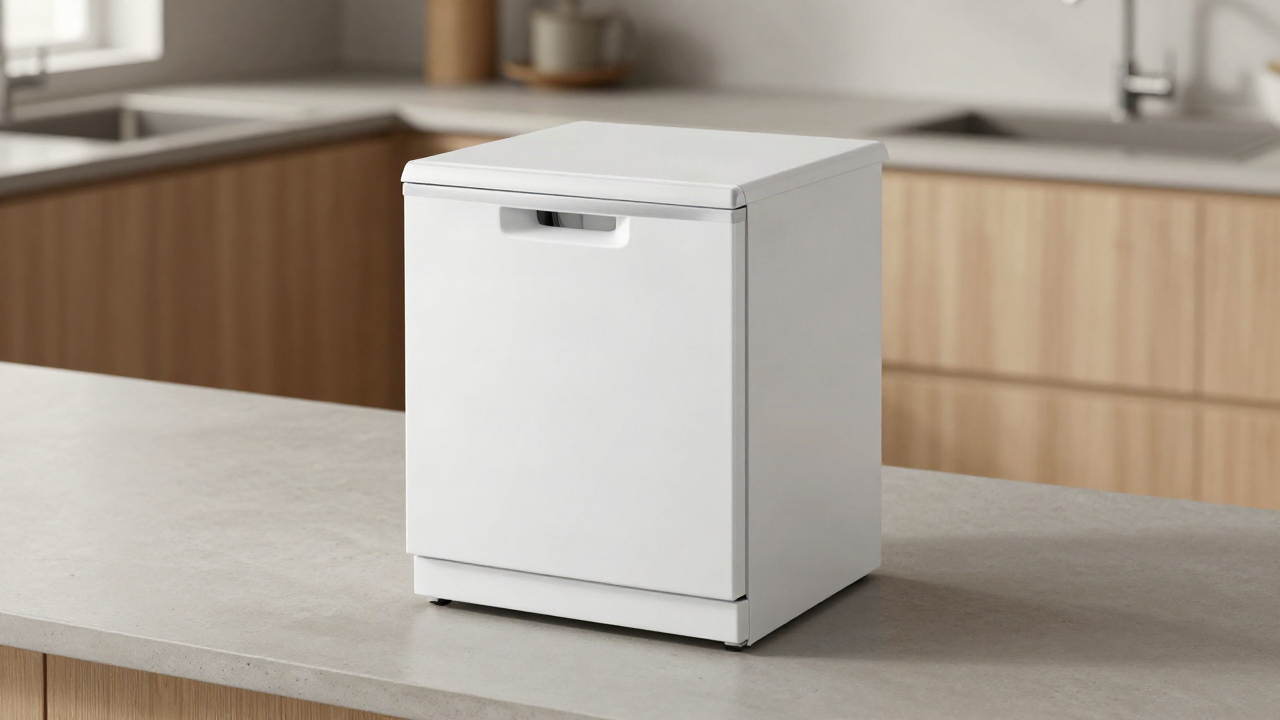
Use the residue itself as the first diagnostic
| What you see | Likely place to start | Why |
|---|---|---|
| Loose food bits or sand-like grit on many dishes | Filter and spray arm | Captured debris may be recirculating, or water may not be reaching the load effectively |
| Debris mostly inside cups or bowls | Loading angle and spray path | Concave items can catch loosened particles when they are too flat or shielded |
| Dirty zones on one side of the rack | Blocked spray jets or an obstructed spray arm | One part of the load may be outside the effective spray pattern |
| White, chalky, or cloudy film | Water hardness, detergent amount/type, rinse aid, model guidance | Mineral or detergent film can feel rough but is not the same as food grit |
| Dirty dishes plus poor draining or stale water | Drain path and filter area | Drain restrictions can compound cleaning problems |
Whirlpool specifically lists “dishes feel gritty to the touch” as one sign that a dishwasher filter may need cleaning. That makes the filter the highest-value first check because it is both common and relatively easy to inspect on models with user-cleanable filters.
Cause 1: the filter is holding more than you think
A dishwasher filter is supposed to keep larger debris and fine particles away from the pump or from recirculating onto dishes. When that filter loads up, cleaning performance can fall even if the machine still fills, sprays, and drains.
Unplug or power down the machine as your manual directs, let it cool, and locate the filter. Do not force a filter that does not turn the way you expect—compact models do not all use the same locking system. Rinse a removable filter under running water and use only the cleaning tools your manual allows. Whirlpool warns against abrasive tools that can damage filter components.
Cause 2: the spray arm can spin but still wash badly
A spray arm does not need to be completely jammed to create a dirty zone. A seed, rice grain, label fragment, or mineral deposit in a few jets can distort the spray pattern. Before a cycle, check that the arm can rotate freely and that tall plates, pan handles, or utensils are not physically blocking it.
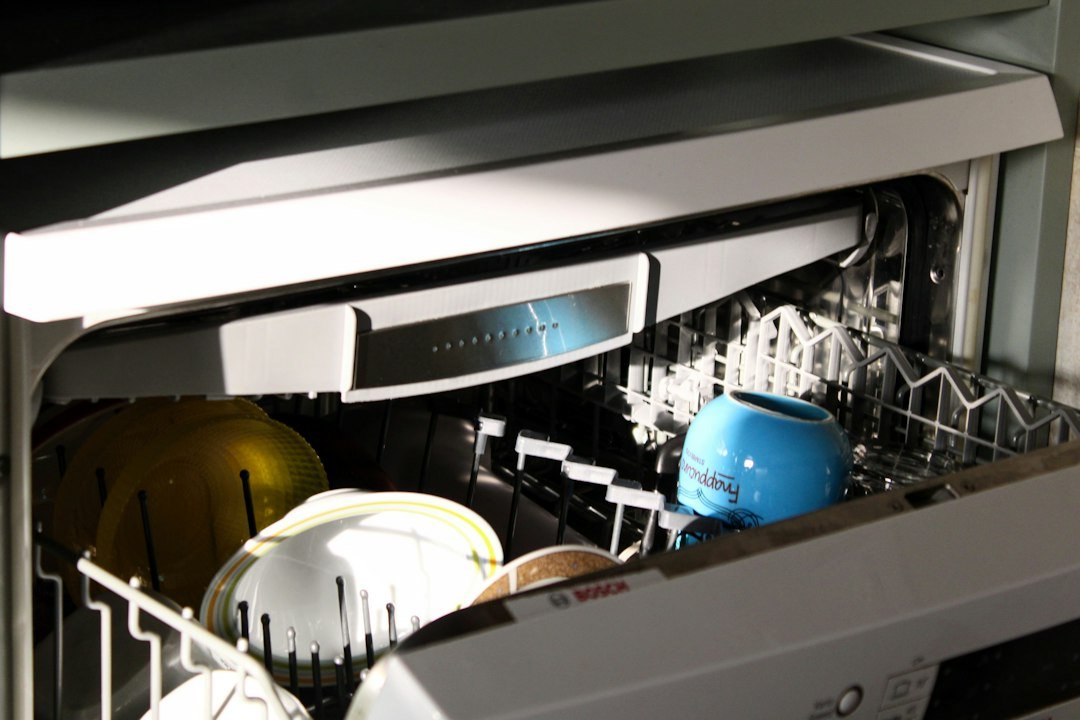
If your model allows jet cleaning, follow the manual rather than pushing metal objects into openings. A damaged spray hole can create a different wash pattern than the manufacturer intended.
Cause 3: a compact rack is easier to overload than a full-size rack
Countertop machines reward careful loading because every inch matters. The common mistake is treating capacity as a stacking challenge instead of a water-flow challenge.
Use this NookPrep rule: if one item blocks the face of another item from the likely spray direction, that second item is not really “loaded”—it is shielded. Leave space between bowls, angle cups so they drain, keep tall utensils away from the spray path, and avoid nesting spoons or plates tightly together.
If you regularly fight the rack, our guide to the smallest countertop dishwasher dimensions explains why exterior size alone does not predict usable interior capacity.
Cause 4: detergent and water can create residue that looks like grit
If the residue is white or chalky rather than obviously food-based, do not automatically keep adding detergent. Water hardness, detergent concentration, cycle choice, rinse aid, and the amount of soil on the dishes can all change what remains on the surface.
Use the detergent type and quantity recommended for your machine and local water conditions. More detergent is not a universal fix for poor cleaning. On some compact tank models, manually added water also needs to reach the machine’s required fill level before the cycle begins; on faucet-connected models, supply restrictions can be a different issue. Follow the exact manual because fill systems vary.
Cause 5: the machine may be washing with a drainage problem in the background
A little water in a filter sump can be normal on some machines, so “I see water” does not automatically mean a failed drain. But if you have an unusual amount of standing dirty water, slow draining, an error code, or residue returning after the filter and loading have been corrected, inspect the drain hose and drain path according to the manufacturer instructions.
For portable tank/faucet choices, see our water tank vs faucet hookup guide. The connection style changes the setup, but neither style can compensate for a blocked filter or bad rack loading.
The 10-minute reset before you run another cycle
- Identify whether the residue is food grit or mineral/detergent film.
- Inspect and clean the user-serviceable filter according to the manual.
- Check that the spray arm rotates freely and visible jets are not obstructed.
- Reload with gaps between surfaces and tilted cups/bowls.
- Confirm detergent amount/type and water/fill requirements for your model.
- Check for abnormal standing water or a kinked/restricted drain hose.
- Run a normal test load rather than an overloaded “maximum capacity” load.
If the lighter test load comes out clean, the appliance may not be failing at all—the problem was likely filtration, water flow, or loading density. If grit returns immediately after all user-serviceable checks, the pump, spray system, or another component may need professional service.
FAQ
Why do my glasses feel gritty after the dishwasher?
A dirty filter is one common cause, especially when the residue is particulate rather than a smooth haze. Also check whether cups are positioned to drain and whether the spray arm is unobstructed.
Should I rinse every dish before loading a countertop dishwasher?
Usually you should remove large food scraps, but the exact pre-rinse guidance depends on the dishwasher and detergent. Excessive pre-rinsing is not a substitute for keeping the filter and spray path clean.
Why is the grit worse in bowls and cups?
Concave items can collect loosened particles if they are loaded too flat. Tilt them so wash water and debris can drain instead of pooling.
Does a little water under the filter mean the dishwasher is clogged?
Not necessarily. Some dishwashers intentionally retain a small amount of water around the filter/seal area. Compare what you see with your model’s manual before treating it as a drain failure.
When should I stop troubleshooting and call for service?
If the filter, spray arm, loading, detergent, water supply, and drain hose checks do not improve cleaning—or the machine shows errors, leaks, fails to drain, or makes abnormal mechanical noises—contact the manufacturer or a qualified service provider.
Conclusion: stop rerunning the same bad load
Gritty dishes are useful evidence. Start where the evidence points: filter for widespread particles, loading and spray path for local dirty zones, water/detergent for chalky film, and drainage when dirty standing water joins the problem. A small countertop dishwasher has less room for loading mistakes, but that also makes a controlled test load a fast way to isolate the cause.
For broader buying and setup guidance, visit our countertop dishwasher hub.
Sources & methodology
This is a research-based troubleshooting guide, not a hands-on test of one dishwasher model. NookPrep used manufacturer maintenance guidance and converted it into a residue-location diagnostic for compact-kitchen users.