
Does the Keurig K-Compact Save Enough Space to Matter?
· NookPrep Editorial Team
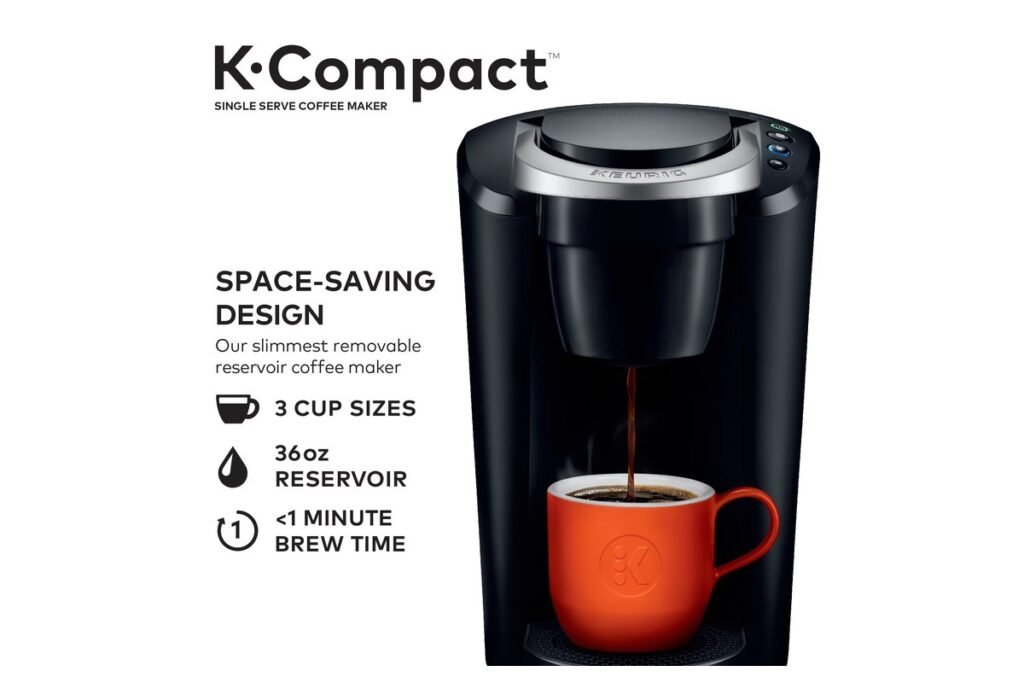
The Keurig K-Compact is a single-serve coffee maker built around convenience rather than espresso craft. Keurig lists 6, 8 and 10-ounce brew sizes, a removable 36-ounce water reservoir and an approximately 8.2-inch width. Those numbers are useful only when compared with the space needed to open the handle, refill the tank and brew the drinks you actually like.
Disclosure: As an Amazon Associate I earn from qualifying purchases. This article is based on manufacturer specifications and editorial analysis, not firsthand testing. The links marked paid links may generate an affiliate commission.
Check on Amazon — Keurig K-Compact black (paid link; verify the selected model, color and seller)
Listing note: The K-Compact ASIN was cross-checked with a third-party catalog, not a live Amazon checkout. Check the model and current sale conditions.
Eight inches wide is not the full counter footprint
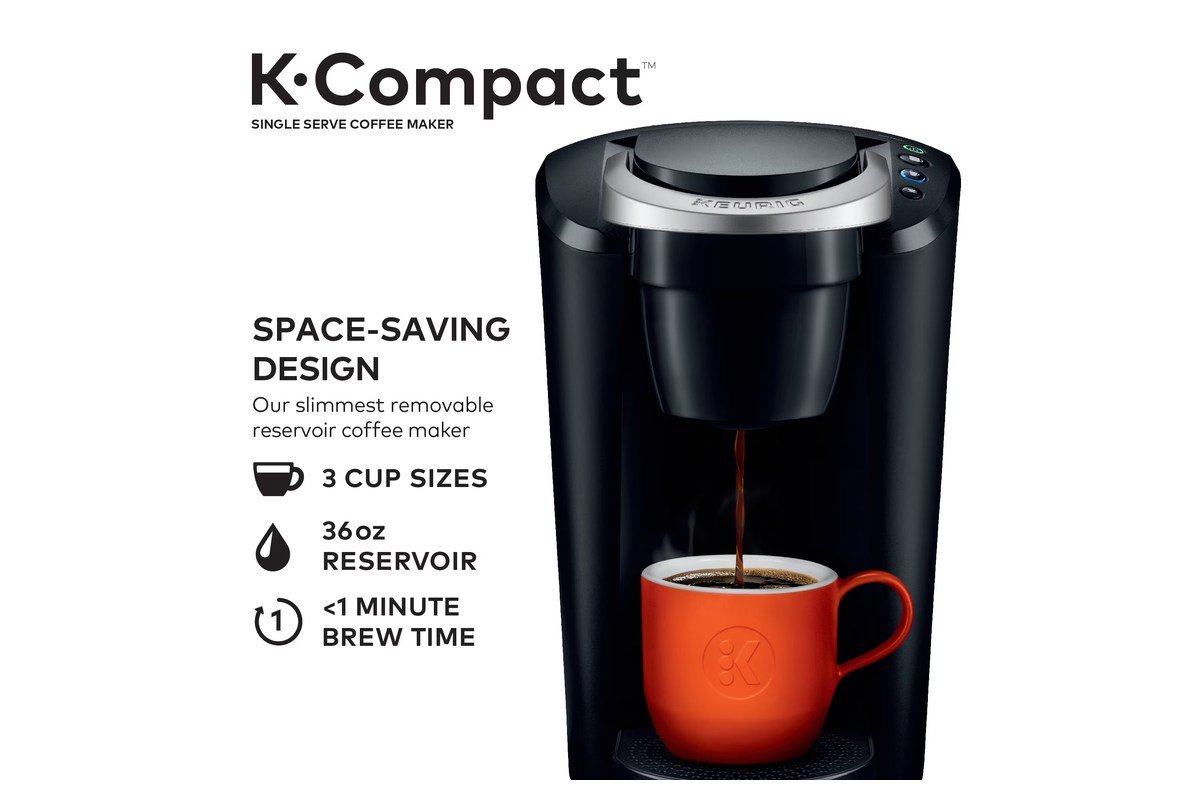
Keurig lists about 8.2 inches wide and 13.2 inches deep. This consideration is more useful when you imagine your own kitchen instead of an empty product-photography set. Put the Keurig K-Compact in the middle of a normal weekday: when will you use it, what else will share the worktop, and what would make you reach for another tool instead? It is tempting to use a headline specification as a final answer. In a small kitchen the important difference is often the sequence of small actions before and after the advertised feature is used. A product can perform its narrow intended job and still be wrong for a particular household.
Allow room for the reservoir, power cord and comfortable access in addition to the body dimensions. Rather than treating this as a minor caveat, use it to create a real purchase test. Compare the claim with your current equipment and typical use. Think about a busy morning, a relaxed weekend and the day when you are too tired to perform a complicated setup. Would the benefit remain relevant in each situation? If only one unusual scenario makes the product attractive, the purchase may not solve a recurring problem. This is reasoning from documented features and ordinary kitchen constraints, not the result of an unreported hands-on experiment.
One practical way to resolve this question is to write down a yes-or-no requirement before you open a shopping page. Avoid asking simply whether the appliance is good; ask whether its size, process and limitations match a task you repeat every week. Check the official manual for clearance, preparation, operation and cleaning requirements. Product dimensions alone never guarantee that an appliance can be operated safely in an arbitrary corner. It is equally important to confirm the exact model name with the seller, because visually similar product families can differ in details that affect the buying decision.
The cabinet-opening surprise
Height is about 12.5 inches closed and 16.25 inches with the handle open. This consideration is more useful when you imagine your own kitchen instead of an empty product-photography set. Put the Keurig K-Compact in the middle of a normal weekday: when will you use it, what else will share the worktop, and what would make you reach for another tool instead? It is tempting to use a headline specification as a final answer. In a small kitchen the important difference is often the sequence of small actions before and after the advertised feature is used. A product can perform its narrow intended job and still be wrong for a particular household.
A machine that fits under a shelf may not be usable there without moving it forward. Rather than treating this as a minor caveat, use it to create a real purchase test. Compare the claim with your current equipment and typical use. Think about a busy morning, a relaxed weekend and the day when you are too tired to perform a complicated setup. Would the benefit remain relevant in each situation? If only one unusual scenario makes the product attractive, the purchase may not solve a recurring problem. This is reasoning from documented features and ordinary kitchen constraints, not the result of an unreported hands-on experiment.
Choosing among 6, 8 and 10 ounces
Brew-size choice affects the volume of the drink rather than magically adding coffee. This consideration is more useful when you imagine your own kitchen instead of an empty product-photography set. Put the Keurig K-Compact in the middle of a normal weekday: when will you use it, what else will share the worktop, and what would make you reach for another tool instead? It is tempting to use a headline specification as a final answer. In a small kitchen the important difference is often the sequence of small actions before and after the advertised feature is used. A product can perform its narrow intended job and still be wrong for a particular household.
A larger cup from the same pod may taste less concentrated to some drinkers. Rather than treating this as a minor caveat, use it to create a real purchase test. Compare the claim with your current equipment and typical use. Think about a busy morning, a relaxed weekend and the day when you are too tired to perform a complicated setup. Would the benefit remain relevant in each situation? If only one unusual scenario makes the product attractive, the purchase may not solve a recurring problem. This is reasoning from documented features and ordinary kitchen constraints, not the result of an unreported hands-on experiment.
Shopping note: Exact Amazon product identifiers must be verified against the correct model and color before affiliate links go live. This article does not invent ASINs or prices.
A 36-ounce reservoir changes refill frequency
A removable tank is convenient when the sink is nearby. This consideration is more useful when you imagine your own kitchen instead of an empty product-photography set. Put the Keurig K-Compact in the middle of a normal weekday: when will you use it, what else will share the worktop, and what would make you reach for another tool instead? It is tempting to use a headline specification as a final answer. In a small kitchen the important difference is often the sequence of small actions before and after the advertised feature is used. A product can perform its narrow intended job and still be wrong for a particular household.
The number of cups depends on your actual brew-size choices and any additional water used for maintenance. Rather than treating this as a minor caveat, use it to create a real purchase test. Compare the claim with your current equipment and typical use. Think about a busy morning, a relaxed weekend and the day when you are too tired to perform a complicated setup. Would the benefit remain relevant in each situation? If only one unusual scenario makes the product attractive, the purchase may not solve a recurring problem. This is reasoning from documented features and ordinary kitchen constraints, not the result of an unreported hands-on experiment.
Who benefits from the pod format
Quick individual drinks can be convenient during weekday mornings. This consideration is more useful when you imagine your own kitchen instead of an empty product-photography set. Put the Keurig K-Compact in the middle of a normal weekday: when will you use it, what else will share the worktop, and what would make you reach for another tool instead? It is tempting to use a headline specification as a final answer. In a small kitchen the important difference is often the sequence of small actions before and after the advertised feature is used. A product can perform its narrow intended job and still be wrong for a particular household.
Cost and disposal of pods should be weighed against using ground coffee in another brewer. Rather than treating this as a minor caveat, use it to create a real purchase test. Compare the claim with your current equipment and typical use. Think about a busy morning, a relaxed weekend and the day when you are too tired to perform a complicated setup. Would the benefit remain relevant in each situation? If only one unusual scenario makes the product attractive, the purchase may not solve a recurring problem. This is reasoning from documented features and ordinary kitchen constraints, not the result of an unreported hands-on experiment.
What the machine is not
K-Compact is not an espresso machine or a grinder. This consideration is more useful when you imagine your own kitchen instead of an empty product-photography set. Put the Keurig K-Compact in the middle of a normal weekday: when will you use it, what else will share the worktop, and what would make you reach for another tool instead? It is tempting to use a headline specification as a final answer. In a small kitchen the important difference is often the sequence of small actions before and after the advertised feature is used. A product can perform its narrow intended job and still be wrong for a particular household.
Buyers wanting crema-rich espresso or fresh-ground beans should choose a different brewing category. Rather than treating this as a minor caveat, use it to create a real purchase test. Compare the claim with your current equipment and typical use. Think about a busy morning, a relaxed weekend and the day when you are too tired to perform a complicated setup. Would the benefit remain relevant in each situation? If only one unusual scenario makes the product attractive, the purchase may not solve a recurring problem. This is reasoning from documented features and ordinary kitchen constraints, not the result of an unreported hands-on experiment.
How to measure a busy morning
Ask whether you brew only one mug or prepare drinks for a household. This consideration is more useful when you imagine your own kitchen instead of an empty product-photography set. Put the Keurig K-Compact in the middle of a normal weekday: when will you use it, what else will share the worktop, and what would make you reach for another tool instead? It is tempting to use a headline specification as a final answer. In a small kitchen the important difference is often the sequence of small actions before and after the advertised feature is used. A product can perform its narrow intended job and still be wrong for a particular household.
Single-cup cycles can become repetitive when several people want coffee at once. Rather than treating this as a minor caveat, use it to create a real purchase test. Compare the claim with your current equipment and typical use. Think about a busy morning, a relaxed weekend and the day when you are too tired to perform a complicated setup. Would the benefit remain relevant in each situation? If only one unusual scenario makes the product attractive, the purchase may not solve a recurring problem. This is reasoning from documented features and ordinary kitchen constraints, not the result of an unreported hands-on experiment.
Descaling and normal upkeep
A water reservoir and heating path need care according to the manual. This consideration is more useful when you imagine your own kitchen instead of an empty product-photography set. Put the Keurig K-Compact in the middle of a normal weekday: when will you use it, what else will share the worktop, and what would make you reach for another tool instead? It is tempting to use a headline specification as a final answer. In a small kitchen the important difference is often the sequence of small actions before and after the advertised feature is used. A product can perform its narrow intended job and still be wrong for a particular household.
Do not invent exact cleaning intervals without considering water hardness and official instructions. Rather than treating this as a minor caveat, use it to create a real purchase test. Compare the claim with your current equipment and typical use. Think about a busy morning, a relaxed weekend and the day when you are too tired to perform a complicated setup. Would the benefit remain relevant in each situation? If only one unusual scenario makes the product attractive, the purchase may not solve a recurring problem. This is reasoning from documented features and ordinary kitchen constraints, not the result of an unreported hands-on experiment.
Confirming the K35 family listing
Retailer model labels and colors can differ from broad K-Compact marketing pages. This consideration is more useful when you imagine your own kitchen instead of an empty product-photography set. Put the Keurig K-Compact in the middle of a normal weekday: when will you use it, what else will share the worktop, and what would make you reach for another tool instead? It is tempting to use a headline specification as a final answer. In a small kitchen the important difference is often the sequence of small actions before and after the advertised feature is used. A product can perform its narrow intended job and still be wrong for a particular household.
Avoid confusing the K-Compact with K-Mini or K-Mini Mate machines. Rather than treating this as a minor caveat, use it to create a real purchase test. Compare the claim with your current equipment and typical use. Think about a busy morning, a relaxed weekend and the day when you are too tired to perform a complicated setup. Would the benefit remain relevant in each situation? If only one unusual scenario makes the product attractive, the purchase may not solve a recurring problem. This is reasoning from documented features and ordinary kitchen constraints, not the result of an unreported hands-on experiment.
Compare on Amazon — Keurig K-Compact black (paid link; verify the selected model, color and seller)
Should you choose a slim brewer instead
Narrow width only matters if depth and door clearance also work. This consideration is more useful when you imagine your own kitchen instead of an empty product-photography set. Put the Keurig K-Compact in the middle of a normal weekday: when will you use it, what else will share the worktop, and what would make you reach for another tool instead? It is tempting to use a headline specification as a final answer. In a small kitchen the important difference is often the sequence of small actions before and after the advertised feature is used. A product can perform its narrow intended job and still be wrong for a particular household.
Consider whether a removable reservoir is worth the extra space versus a smaller pour-in model. Rather than treating this as a minor caveat, use it to create a real purchase test. Compare the claim with your current equipment and typical use. Think about a busy morning, a relaxed weekend and the day when you are too tired to perform a complicated setup. Would the benefit remain relevant in each situation? If only one unusual scenario makes the product attractive, the purchase may not solve a recurring problem. This is reasoning from documented features and ordinary kitchen constraints, not the result of an unreported hands-on experiment.
The verdict after measuring the cabinet
K-Compact is appealing to a pod user who values a reservoir and limited brew-size choices. This consideration is more useful when you imagine your own kitchen instead of an empty product-photography set. Put the Keurig K-Compact in the middle of a normal weekday: when will you use it, what else will share the worktop, and what would make you reach for another tool instead? It is tempting to use a headline specification as a final answer. In a small kitchen the important difference is often the sequence of small actions before and after the advertised feature is used. A product can perform its narrow intended job and still be wrong for a particular household.
Buyers with very low cabinets or multi-cup household routines should consider alternatives. Rather than treating this as a minor caveat, use it to create a real purchase test. Compare the claim with your current equipment and typical use. Think about a busy morning, a relaxed weekend and the day when you are too tired to perform a complicated setup. Would the benefit remain relevant in each situation? If only one unusual scenario makes the product attractive, the purchase may not solve a recurring problem. This is reasoning from documented features and ordinary kitchen constraints, not the result of an unreported hands-on experiment.
What everyday use changes
Keurig’s K-Compact sounds impressive at just over eight inches wide, but what matters is the movement of your hand in the kitchen. You must lift the pod handle, reach the removable water reservoir and position a cup beneath the outlet. A brewer can fit between two appliances yet still be awkward if a cupboard prevents the handle from opening all the way. Model your actual morning: where will your favorite mug sit, and where will you set the used pod after brewing? The small housing is only part of the footprint.
The 36-ounce tank also changes the routine, but not equally for everyone. Someone making one short coffee most days may appreciate fewer refill trips. Two coffee drinkers using larger cups will empty it sooner. If your household typically brews a whole carafe at breakfast, pod-by-pod brewing may add repeated steps rather than simplify them. A brewer should reduce the work you actually do, not merely look small from the front.
The details worth checking before checkout
The K-Compact uses K-Cup-compatible pods, so the machine price is only the first cost. Your ongoing choice of capsules, possible reusable filter accessories, and descaling supplies affect value more than a small difference in the sticker price. The official Keurig resources describe compatibility with the My K-Cup Universal Reusable Coffee Filter, but that filter is not automatically part of every bundle. Confirm accessory inclusion instead of trusting an image in a seller carousel.
Cup height matters as well. If you regularly use a tall travel mug, compare its dimensions with the manufacturer’s stated clearance, including how removing the drip tray changes the available space. An extra travel-mug accessory is not a replacement for a brewer physically able to fit your container. Check how the removable reservoir can be lifted out in your cabinet arrangement, because frequent refilling under a shelf can be surprisingly inconvenient.
What the published evidence establishes
Manufacturer specifications tell us the K-Compact offers 6-, 8- and 10-ounce selection buttons, a 36-ounce reservoir and approximate body dimensions. They do not establish actual beverage temperature, noise level, extraction yield, descaling frequency or repair life in your home. We have not tested this machine in person. Describing a coffee’s strength just from selecting a smaller cup size would also oversimplify the role of pod formulation and extraction; compare what you drink, not only the ounces on the button.
A credible comparison with a K-Mini-type brewer starts with reservoir size and placement, handle clearance and daily number of servings. The K-Compact trades a removable multi-cup tank for a wider profile than some extremely narrow machines. A carafe brewer solves a different need. Do not conflate different Keurig models simply because their black plastic shells look similar in thumbnails. Match the K35 designation and listing photos to the exact product before ordering.
A practical buying checklist
Measure the shelf height with the handle raised, not just the advertised closed-machine height. Keurig gives about 12.5 inches closed and a taller height when open; check current documentation for exact measurements. Confirm the 8.2-inch width and approximately 13.2-inch depth fit beside a sink or kettle without taking over the work surface. Pick a place where the reservoir can be removed without bumping a cabinet or an appliance above it.
At checkout, check that the listing is for the black K-Compact / K35 family and not a K-Mini or K-Express, which are separate designs. Confirm the retailer’s included parts, current availability and warranty; we cannot infer them from a historic seller record. Budget for the consumables you will actually use. A smaller machine helps only if the refill, pod disposal and cleaning routine fits your mornings, which is the core reason to consider or reject the K-Compact.
Source and review boundaries
Primary specifications and model information: https://www.keurig.com/Home-Coffee-Makers/Keurig%C2%AE-K-Compact%C2%AE-Coffee-Maker/p/K-Compact-Coffee-Maker. NookPrep has not claimed to have performed first-person measurements, electrical testing, taste testing, reliability tracking, or manufacturer certification. Confirm current availability and the precise retail model. The missing exact-model Amazon product links and any image-model verification must be resolved before publication.
What to confirm before you buy
- Brew sizes: Manufacturer choices are 6, 8, and 10 ounces.
- Reservoir: The removable tank holds 36 ounces.
- Height check: Allow clearance for handle opening, not only the machine body.
Primary product documentation
These are manufacturer materials, not independent performance testing. Verify specifications for the exact variant and seller listing before purchase.
Amazon product links and model checklist
The product buttons are affiliate links. Seller, variant, availability and price can change. Check the exact model designation against the manufacturer pages before purchasing; no physical product testing is claimed in this guide.
Review the exact listing — Keurig K-Compact black (paid link; verify the selected model, color and seller)